Robert Leighton – Love the Brotherhood (Christian audio reading)

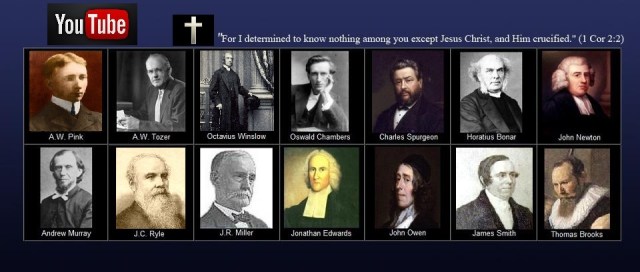
A large video collection of classic hymns, contemporary Praise and Worship songs, and the works (audio books, devotional readings, and sermons) of men greatly used of God, such as: Charles Spurgeon, Jonathan Edwards, A.W. Tozer, A.W. Pink, John Owen, Oswald Chambers, Andrew Murray, E.M. Bounds, John Bunyan, George Whitefield, and many more, covering topics on many aspects of the Christian life. May your time spent here be blessed.

http://vid.io/x3F
Robert Leighton – Love the Brotherhood

Robert Leighton playlist: http://www.youtube.com/view_play_list?p=A4852D4961CB4500

Galatians 6:10 Therefore, as we have opportunity, let us do good to all, especially to those who are of the household of faith.

Romans 8:29 For whom He foreknew, He also predestined to be conformed to the image of His Son, that He might be the firstborn among many brethren.

John 8:35 And a slave does not abide in the house forever, but a son abides forever.

Christian audio book reading.

From “A Practical Commentary Upon the First Epistle of St. Peter,” by Robert Leighton

“We need scarcely recommend this truly heavenly work. It is a favorite with all spiritual men.” – Charles Spurgeon

Robert Leighton (1611 1684) was a Scottish prelate and scholar, best known as a church minister, Bishop of Dunblane, Archbishop of Glasgow, and Principal of the University of Edinburgh from 1653 to 1662. He was “noted for his Christian piety, his humility and gentleness, and his devotion to his calling.”

Posted in Uncategorized | Tagged , , , , , , , , , , , , , , | 1 Comment

The Burdens we Carry – Augustine

The Burdens we Carry - Augustine

“God of our life, there are days when the burdens we carry chafe our shoulders and weigh us down; when the road seems dreary and endless, the skies grey and threatening; when our lives have no music in them, and our hearts are lonely, and our souls have lost their courage. Flood the path with light, run our eyes to where the skies are full of promise; tune our hearts to brave music; give us the sense of comradeship with heroes and saints of every age; and so quicken our spirits that we may be able to encourage the souls of all who journey with us on the road of life, to Your honour and glory.”

– Augustine

https://www.facebook.com/ChristianDevotionalReadings

Posted in Uncategorized | Tagged , , , , , , , , , , , , , , , | Leave a comment

Treasury of David: Commentary on Psalm 23 – Charles Spurgeon

A large video collection of classic hymns, contemporary Praise and Worship songs, and the works (audio books, devotional readings, and sermons) of men greatly used of God, such as: Charles Spurgeon, Jonathan Edwards, A.W. Tozer, A.W. Pink, John Owen, Oswald Chambers, Andrew Murray, E.M. Bounds, John Bunyan, George Whitefield, and many more, covering topics on many aspects of the Christian life. May your time spent here be blessed.

http://vid.io/x3F

Treasury of David: Commentary on Psalm 23 – Charles Spurgeon

Treasury of David: Commentary on Psalms – C.H. Spurgeon playlist: http://www.youtube.com/view_play_list?p=348048FBD9CF9258

Spurgeon Sermons playlist: http://www.youtube.com/view_play_list?p=CDB844A9113F938C

Psalm 23

1 The Lord is my shepherd; I shall not want.
2 He maketh me to lie down in green pastures: he leadeth me beside the still waters.
3 He restoreth my soul: he leadeth me in the paths of righteousness for his name’s sake.
4 Yea, though I walk through the valley of the shadow of death, I will fear no evil: for thou art with me; thy rod and thy staff they comfort me.
5 Thou preparest a table before me in the presence of mine enemies: thou anointest my head with oil; my cup runneth over.
6 Surely goodness and mercy shall follow me all the days of my life: and I will dwell in the house of the Lord for ever.

Bible commentary on every verse in every chapter of Psalms.
Spurgeon’s expository comments help the reader in his understanding of Scripture.
Frequent “Explanatory notes and quaint sayings” offer helpful insights from many different Bible teachers throughout history on each Psalm.
“Hints to the village preacher” aid in preparing Bible studies and sermons.

The Treasury of David took Spurgeon 15 years to complete. It was originally published in installments, until finally made available in a seven volume set.

The complete unabridged work is part of the SwordSearcher Deluxe Bible Study Library, with commentary on any verse of the Psalms just a click away. As with any library resource in SwordSearcher, the entire text can be searched instantaneously for any word or phrase.

“The delightful study of the Psalms has yielded me boundless profit and ever-growing pleasure; common gratitude constrains me to communicate to others a portion of the benefit, with the prayer that it may induce them to search further for themselves.” -C. H. Spurgeon, from the Preface.

C. H. Spurgeon – Baptist preacher

The descendant of several generations of Independent ministers, he was born at Kelvedon, Essex, and became a Baptist in 1850. In the same year he preached his first sermon, and in 1852 he was appointed pastor of the Baptist congregation at Waterbeach. In 1854 he went to Southwark, where his sermons drew such crowds that a new church, the Metropolitan Tabernacle in Newington Causeway, had to be built for him. Apart from his preaching activites he founded a pastors’ college, an orphanage, and a colportage association for the propagation of uplifting literature. Spurgeon was a strong Calvinist. He had a controversy in 1864 with the Evangelical party of the Church of England for remaining in a Church that taught Baptismal Regeneration, and also estranged considerable sections of his own community by rigid opposition to the more liberal methods of Biblical exegesis. These differences led to a rupture with the Baptist Union in 1887. He owed his fame as a preacher to his great oratorical gifts, humour, and shrewd common sense, which showed itself especially in his treatment of contemporary problems. Among his works are The Saint and his Saviour (1857), Commenting and Commentaries (1876) and numerous volumes of sermons (translated into many languages).

Posted in Uncategorized | Tagged , , , , , , , , , , , , , , | 2 Comments

Your Afflictions are not Eternal – Samuel Rutherford

Your Afflictions are not Eternal - Samuel Rutherford

“Your afflictions are not eternal, time will end them, and so shall ye at length see the Lord’s salvation; His love sleepeth not, is still in working for you; His salvation will not tarry nor linger; and suffering for Him is the noblest cross out of heaven. Your Lord hath the choice of ten thousand other crosses, beside this, to exercise you withal; but His wisdom and His love choosed out this for you, beside them all; and take it as a choice one, and make use of it. Let the Lord absolutely have the ordering of your evils and troubles, and put them off you, by recommending your cross and your furnace to Him, who hath skill to melt His own metal, and knoweth well what to do with His furnace.”

– Samuel Rutherford

https://www.facebook.com/ChristianDevotionalReadings

Posted in Uncategorized | Tagged , , , , , , , , , , , , , , | 2 Comments

Have Mercy upon me, O God / Psalm 51

A large video collection of classic hymns, contemporary Praise and Worship songs, and the works (audio books, devotional readings, and sermons) of men greatly used of God, such as: Charles Spurgeon, Jonathan Edwards, A.W. Tozer, A.W. Pink, John Owen, Oswald Chambers, Andrew Murray, E.M. Bounds, John Bunyan, George Whitefield, and many more, covering topics on many aspects of the Christian life. May your time spent here be blessed.

http://vid.io/x3F
On The Bible playlist: http://www.youtube.com/playlist?list=PLC7DB34EF3CF99FEC

Have Mercy upon me, O God / Psalm 51

1 Have mercy upon me, O God, according to thy lovingkindness: According to the multitude of thy tender mercies blot out my transgressions.

2 Wash me thoroughly from mine iniquity, And cleanse me from my sin.

3 For I know my transgressions; And my sin is ever before me.

4 Against thee, thee only, have I sinned, And done that which is evil in thy sight; That thou mayest be justified when thou speakest, And be clear when thou judgest.

5 Behold, I was brought forth in iniquity; And in sin did my mother conceive me.

6 Behold, thou desirest truth in the inward parts; And in the hidden part thou wilt make me to know wisdom.

7 Purify me with hyssop, and I shall be clean: Wash me, and I shall be whiter than snow.

8 Make me to hear joy and gladness, That the bones which thou hast broken may rejoice.

9 Hide thy face from my sins, And blot out all mine iniquities.

10 Create in me a clean heart, O God; And renew a right spirit within me.

11 Cast me not away from thy presence; And take not thy holy Spirit from me.

12 Restore unto me the joy of thy salvation; And uphold me with a willing spirit.

13 Then will I teach transgressors thy ways; And sinners shall be converted unto thee.

14 Deliver me from bloodguiltiness, O God, thou God of my salvation; And my tongue shall sing aloud of thy righteousness.

15 O Lord, open thou my lips; And my mouth shall show forth thy praise.

16 For thou delightest not in sacrifice; else would I give it: Thou hast no pleasure in burnt-offering.

17 The sacrifices of God are a broken spirit: A broken and contrite heart, O God, thou wilt not despise.

18 Do good in thy good pleasure unto Zion: Build thou the walls of Jerusalem.

19 Then will thou delight in the sacrifices of righteousness, In burnt-offering and in whole burnt-offering: Then will they offer bullocks upon thine altar.

Posted in Uncategorized | Tagged , , , , , , , , , , , , , | Leave a comment

Christians are debtors to all men – Leonard Ravenhill

Christians are debtors to all men - Leonard Ravenhill

We Christians are debtors to all men at all times in all places, but we are so smug to the lostness of men. We’ve been “living in Laodicea”, lax, loose, lustful, and lazy. Why is there this criminal indifference to the lostness of men? Our condemnation is that we know how to live better than we are living. The Bible parable says that while men slept, the enemy sowed tares among the wheat. A boy who rises at 4:30 to deliver papers is considered a go-getter, but to urge our young people to rise at 5:30 to pray is considered fanaticism. We must once again wear the harness of discipline. There is no other way.

– Leonard Ravenhill

https://www.facebook.com/ChristianDevotionalReadings

Posted in Uncategorized | Tagged , , , , , , , , , , , , , , | Leave a comment

Man’s good opinion of himself – Horatius Bonar

Man's good opinion of himself - Horatius Bonar

Man’s good opinion of himself makes him think it quite possible to win God’s favour by his own religious performances; his bad opinion of God makes him unwilling and afraid to put his case wholly into His hands. The object of the Holy Spirit’s work (in convincing of sin) is to alter the man’s (sinner’s) opinion of himself and so to reduce his estimate of his own character that he should think of himself as God does, and so cease to suppose it possible that he can be justified by any excellency of his own. The Spirit then alters his evil opinion of God, so as to make him see that the God with whom he has to do is really the God of all grace.

– Horatius Bonar

https://www.facebook.com/ChristianDevotionalReadings

Posted in Uncategorized | Tagged , , , , , , , , , , , , , , | 1 Comment

John Newton – Desires Unrealized

A large video collection of classic hymns, contemporary Praise and Worship songs, and the works (audio books, devotional readings, and sermons) of men greatly used of God, such as: Charles Spurgeon, Jonathan Edwards, A.W. Tozer, A.W. Pink, John Owen, Oswald Chambers, Andrew Murray, E.M. Bounds, John Bunyan, George Whitefield, and many more, covering topics on many aspects of the Christian life. May your time spent here be blessed.

http://vid.io/x3F
John Newton – Desires Unrealized

John Newton playlist: http://www.youtube.com/view_play_list?p=F44544DEAD10B5D2

https://www.facebook.com/ChristianDevotionalReadings

“You cannot do the things that you would.” (Gal. 5:17)

Newton was born in London July 24, 1725, the son of a commander of a merchant ship which sailed the Mediterranean. When John was eleven, he went to sea with his father and made six voyages with him before the elder Newton retired. In 1744 John was impressed into service on a man-of-war, the H. M. S. Harwich. Finding conditions on board intolerable, he deserted but was soon recaptured and publicly flogged and demoted from midshipman to common seaman.

Although he had had some early religious instruction from his mother, who had died when he was a child, he had long since given up any religious convictions. However, on a homeward voyage, while he was attempting to steer the ship through a violent storm, he experienced what he was to refer to later as his “great deliverance.” He recorded in his journal that when all seemed lost and the ship would surely sink, he exclaimed, “Lord, have mercy upon us.” Later in his cabin he reflected on what he had said and began to believe that God had addressed him through the storm and that grace had begun to work for him.

For the rest of his life he observed the anniversary of May 10, 1748 as the day of his conversion, a day of humiliation in which he subjected his will to a higher power. “Thro’ many dangers, toils and snares, I have already come; ’tis grace has bro’t me safe thus far, and grace will lead me home.” He continued in the slave trade for a time after his conversion; however, he saw to it that the slaves under his care were treated humanely.

In 1750 he married Mary Catlett, with whom he had been in love for many years. By 1755, after a serious illness, he had given up seafaring forever. During his days as a sailor he had begun to educate himself, teaching himself Latin, among other subjects. From 1755 to 1760 Newton was surveyor of tides at Liverpool, where he came to know George Whitefield, deacon in the Church of England, evangelistic preacher, and leader of the Calvinistic Methodist Church. Newton became Whitefield’s enthusiastic disciple. During this period Newton also met and came to admire John Wesley, founder of Methodism. Newton’s self-education continued, and he learned Greek and Hebrew.

He decided to become a minister and applied to the Archbishop of York for ordination. The Archbishop refused his request, but Newton persisted in his goal, and he was subsequently ordained by the Bishop of Lincoln and accepted the curacy of Olney, Buckinghamshire. Newton’s church became so crowded during services that it had to be enlarged. He preached not only in Olney but in other parts of the country. In 1767 the poet William Cowper settled at Olney, and he and Newton became friends.

Cowper helped Newton with his religious services and on his tours to other places. They held not only a regular weekly church service but also began a series of weekly prayer meetings, for which their goal was to write a new hymn for each one. They collaborated on several editions of Olney Hymns, which achieved lasting popularity. The first edition, published in 1779, contained 68 pieces by Cowper and 280 by Newton.

Among Newton’s contributions which are still loved and sung today are “How Sweet the Name of Jesus Sounds” and “Glorious Things of Thee Are Spoken,” as well as “Amazing Grace.” Composed probably between 1760 and 1770 in Olney, “Amazing Grace” was possibly one of the hymns written for a weekly service. The origin of the melody is unknown. Most hymnals attribute it to an early American folk melody. The Bill Moyers special on “Amazing Grace” speculated that it may have originated as the tune of a song the slaves sang.

Posted in Uncategorized | Tagged , , , , , , , , , , , , , , , , | Leave a comment

Conviction of Sin – Leonard Ravenhill

Conviction of Sin - Leonard Ravenhill

Conviction of Sin – Leonard Ravenhill

https://www.facebook.com/ChristianDevotionalReadings

Posted in Uncategorized | Tagged | 1 Comment

Prayer – Edward McKendree (E. M.) Bounds

Prayer - Edward McKendree (E. M.) Bounds

“The more praying there is in the world, the better the world will be, the mightier the forces against evil everywhere. Prayer, in one phase of its operation, is a disinfectant and a preventive. It purifies the air; it destroys the contagion of evil. Prayer is no fitful, short-lived thing. It is no voice crying unheard and unheeded in the silence. It is a voice which goes into God’s ear, and it lives as long as God’s ear is open to holy pleas, as long as God’s heart is alive to holy things. God shapes the world by prayer. Prayers are deathless. The lips that uttered them may be close to death, the heart that felt them may have ceased to beat, but the prayers live before God, and God’s heart is set on them.

“Prayers outlive the lives of those who uttered them; they outlive a generation, outlive an age, outlive a world. That man is the most immortal who has done the most and the best praying. They are God’s heroes, God’s saints, God’s servants, God’s vicegerents. A man can pray better because of the prayers of the past; a man can live holier because of the prayers of the past; the man of many and acceptable prayers has done the truest and greatest service to the incoming generation. The prayers of God’s saints strengthen the unborn generation against the desolating waves of sin and evil.”

– Edward McKendree (E. M.) Bounds

https://www.facebook.com/ChristianDevotionalReadings

#Bounds #Prayer

Posted in Uncategorized | Tagged , , , , , , , , , , , , , , , | 1 Comment