
Behold, I Am Coming Quickly! – Single
This is a link to my iTunes page, where you can find my newly released single, “Behold, I Am Coming Quickly!” May the Lord bless you in its hearing, for His glory.
Behold, I Am Coming Quickly! – Single
This is a link to my iTunes page, where you can find my newly released single, “Behold, I Am Coming Quickly!” May the Lord bless you in its hearing, for His glory.

Christian Devotional Readings
“When we find our souls at all declining, it is best to raise them up presently by…”

Chambers, Oswald: Run Today’s Race
Biography of George Whitefield
J.C. Ryle playlist: http://www.youtube.com/view_play_list?p=F5502DD37912A9C7
J.C. Ryle – (1816-1900), first Anglican bishop of Liverpool
John Charles Ryle was born at Macclesfield and was educated at Eton and at Christ Church, Oxford. He was a fine athlete who rowed and played Cricket for Oxford, where he took a first class degree in Greats and was offered a college fellowship (teaching position) which he declined. The son of a wealthy banker, he was destined for a career in politics before answering a call to ordained ministry.
He was spiritually awakened in 1838 while hearing Ephesians 2 read in church. He was ordained by Bishop Sumner at Winchester in 1842. After holding a curacy at Exbury in Hampshire, he became rector of St Thomas’s, Winchester (1843), rector of Helmingham, Suffolk (1844), vicar of Stradbroke (1861), honorary canon of Norwich (1872), and dean of Salisbury (1880). In 1880, at age 64, he became the first bishop of Liverpool, at the recommendation of Prime Minister Benjamin Disraeli. He retired in 1900 at age 83 and died later the same year.
Ryle was a strong supporter of the evangelical school and a critic of Ritualism. Among his longer works are Christian Leaders of the Eighteenth Century (1869), Expository Thoughts on the Gospels (7 vols, 1856-69) and Principles for Churchmen (1884).
George Whitefield – (1714-1770), Methodist evangelist
George Whitefield was born on December 16, 1714, in Gloucester, England. The youngest of seven children, he was born in the Bell Inn where his father, Thomas, was a wine merchant and innkeeper. His father died when George was two and his widowed mother Elizabeth struggled to provide for her family. Because he thought he would never make much use of his education, at about age 15 George persuaded his mother to let him leave school and work in the inn. However, sitting up late at night, George became a diligent student of the Bible. A visit to his Mother by an Oxford student who worked his way through college encouraged George to pursue a university education. He returned to grammar school to finish his preparation to enter Oxford, losing only about one year of school.
In 1732 at age 17, George entered Pembroke College at Oxford. He was gradually drawn into a group called the “Holy Club” where he met John and Charles Wesley. Charles Wesley loaned him the book, The Life of God in the Soul of Man. The reading of this book, after a long and painful struggle which even affected him physically, finally resulted in George’s conversion in 1735. He said many years later: “I know the place…. Whenever I go to Oxford, I cannot help running to the spot where Jesus Christ first revealed himself to me and gave me the new birth.”
Forced to leave school because of poor health, George returned home for nine months of recuperation. Far from idle, his activity attracted the attention of the bishop of Gloucester, who ordained Whitefield as a deacon, and later as a priest, in the Church of England. Whitefield finished his degree at Oxford and on June 20, 1736, Bishop Benson ordained him. The Bishop, placing his hands upon George’s head, resulted in George’s later declaration that “My heart was melted down and I offered my whole spirit, soul, and body to the service of God’s sanctuary.”
Whitefield was an astounding preacher from the beginning. Though he was slender in build, he stormed in the pulpit as if he were a giant. Within a year it was said that “his voice startled England like a trumpet blast.” At a time when London had a population of less than 700,000, he could hold spellbound 20,000 people at a time at Moorfields and Kennington Common. For thirty-four years his preaching resounded throughout England and America. In his preaching ministry he crossed the Atlantic thirteen times and became known as the ‘apostle of the British empire.’
He was a firm Calvinist in his theology yet unrivaled as an aggressive evangelist. Though a clergyman of the Church of England, he cooperated with and had a profound impact on people and churches of many traditions, including Presbyterians, Congregationalists, and Baptists. Whitefield, along with the Wesleys, inspired the movement that became known as the Methodists. Whitefield preached more than 18,000 sermons in his lifetime, an average of 500 a year or ten a week. Many of them were given over and over again. Fewer than 90 have survived in any form.
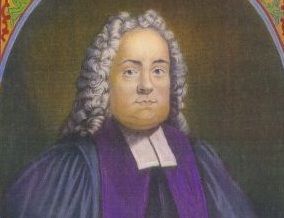
“Think not that I am come to send peace, temporal peace and outward prosperity; they thought Christ came to give all his followers wealth and power in…
An excerpt from “Satan And His Gospel”
A.W. Pink Playlist: http://www.youtube.com/view_play_list?p=10C95ED824AA4503
Matthew 7:21 “Not everyone who says to Me, ‘Lord, Lord,’ will enter the kingdom of heaven, but he who does the will of My Father who is in heaven will enter.”
2 Corinthians 4:3 But if our gospel be hid, it is hid to them that are lost: 4 In whom the god of this world hath blinded the minds of them which believe not, lest the light of the glorious gospel of Christ, who is the image of God, should shine unto them.
Arthur Walkington Pink (1886-1952) evangelist and Biblical scholar
Pink was born in Nottingham, England on April 1, 1886 and became a Christian in his early 20’s. Though born to Christian parents, prior to conversion he migrated into a Theosophical society (an occult gnostic group popular in England during that time), and quickly rose in prominence within their ranks. His conversion came from his father’s patient admonitions from Scripture. It was the verse, Proverbs 14:12, ‘there is a way which seems right to a man, but its end is the way of death,’ which particularly struck his heart and compelled him to renounce Theosophy and follow Jesus.
Desiring to grow in knowledge of the Bible, Pink immigrated to the United States to study at Moody Bible Institute. In 1916 he married Vera E. Russell, who was from Kentucky. However, he left after just two months for Colorado, then California, then Britain. From 1925 to 1928 he served in Australia, including as pastor of two congregations from 1926 to 1928, when he returned to England, and to the United States the following year. He eventually pastored churches Colorado, California, Kentucky and South Carolina.
In 1922 he started a monthly magazine entitled Studies in Scriptures which circulated among English-speaking Christians worldwide, though only to a relatively small circulation list of around 1,000.
In 1934 Pink returned to England, and within a few years turned his Christian service to writing books and pamphlets. Pink died in Stornoway, Scotland on July 15, 1952. The cause of death was anemia.
After Pink’s death, his works were republished by the Banner of Truth Trust and reached a much wider audience as a result. Biographer Iain Murray observes of Pink, “the widespread circulation of his writings after his death made him one of the most influential evangelical authors in the second half of the twentieth century.” His writing sparked a revival of expository preaching and focused readers’ hearts on biblical living.

“There is no peace with God except through Christ! Peace is His peculiar gift. Peace is that legacy which He alone had power to…
On Apostasy playlist: http://www.youtube.com/playlist?p=PL119015B6A8CE1CA9
Apostates & Apostasy – Dr. James White
James White is the director of Alpha and Omega Ministries ( http://www.aomin.org/ ), a Christian apologetics organization based in Phoenix, Arizona. He is a professor, having taught Greek, Systematic Theology, and various topics in the field of apologetics. He has authored or contributed to more than twenty books, including The King James Only Controversy, The Forgotten Trinity, The Potter’s Freedom, and The God Who Justifies. He is an accomplished debater, having engaged in more than one-hundred moderated, public debates with leading proponents of Roman Catholicism, Islam, Jehovah’s Witnesses, and Mormonism, as well as critics such as Bart Ehrman, John Dominic Crossan, Marcus Borg, and John Shelby Spong. He is an elder of the Phoenix Reformed Baptist Church, has been married to Kelli for more than twenty-eight years, and has two children, Joshua and Summer.
1 John 2:15-24 (New King James Version)
15 Do not love the world or the things in the world. If anyone loves the world, the love of the Father is not in him. 16 For all that is in the world—the lust of the flesh, the lust of the eyes, and the pride of life—is not of the Father but is of the world. 17 And the world is passing away, and the lust of it; but he who does the will of God abides forever.
18 Little children, it is the last hour; and as you have heard that the[a] Antichrist is coming, even now many antichrists have come, by which we know that it is the last hour. 19 They went out from us, but they were not of us; for if they had been of us, they would have continued with us; but they went out that they might be made manifest, that none of them were of us.
20 But you have an anointing from the Holy One, and you know all things.[b] 21 I have not written to you because you do not know the truth, but because you know it, and that no lie is of the truth.
22 Who is a liar but he who denies that Jesus is the Christ? He is antichrist who denies the Father and the Son. 23 Whoever denies the Son does not have the Father either; he who acknowledges the Son has the Father also.
24 Therefore let that abide in you which you heard from the beginning. If what you heard from the beginning abides in you, you also will abide in the Son and in the Father.
Eternal Father, Strong to Save – Christian Navy Hymn with lyrics Hymn to the Sea
Christian Hymns playlist: http://www.youtube.com/view_play_list?p=BD1B04EAC0152F4B
Link to my “Christian Devotional Readings” Facebook page: https://www.facebook.com/pages/Christian-Devotional-Readings/196846270398160?ref=hl
Words: William Whiting, 1860. He wrote the lyrics as a poem for a student about to sail for America.
Music: Melita, John B. Dykes, in Hymns Ancient and Modern, 1861. Dykes fittingly named the tune after a locale associated with a Biblical shipwreck. Melita was the
island the Apostle Paul reached after his ship went down (Acts 28:1); today we know it as the isle of Malta.
William Whiting (1825-1878)
In America, Eternal Father is often called the Navy Hymn, because it is sung at the Naval Academy in Annapolis, Maryland. It is also sung on ships of the British Royal Navy and has been translated into French. It was the favorite hymn of U.S. President Franklin Roosevelt and was sung at his funeral in Hyde Park, New York, April 1945. The Navy Band played it in 1963 as U.S. President John Kennedys body was carried up the steps of the U.S. Capitol to lie in state. Roosevelt served as Secretary of the Navy, and Kennedy was a PT boat commander in World War II.
The original words were written as a hymn by a schoolmaster and clergyman of the Church of England, the Rev. William Whiting. Rev. Whiting (1825-1878) resided on the English coast near the sea and had once survived a furious storm in the Mediterranean. His experiences inspired him to pen the ode, “Eternal Father, Strong to Save.” In the following year, 1861, the words were adapted to music by another English clergyman, the Rev. John B. Dykes (1823-1876) , who had originally written the music as “Melita” (ancient name for the Mediterranean island of Malta). Rev. Dykes’ name may be recognized as that of the composer given credit for the music to many other well-known hymns, including “Holy, Holy, Holy,” “Lead, Kindly Light,” “Jesus, Lover of My Soul,” and “Nearer, My God to Thee.”
In the United States, in 1879 the late Rear Adm. Charles Jackson Train, an 1865 graduate of the United States Naval Academy at Annapolis was a lieutenant commander stationed at the Academy in charge of the Midshipman Choir. In that year, Lt. Comdr. Train inaugurated the present practice of concluding each Sunday’s Divine Services at the Academy with the singing of the first verse of this hymn.
The hymn, entitled “Eternal Father, Strong to Save,” is found in most Protestant Hymnals. It can be more easily located in these hymnals by consulting the “Index to First Lines” under “Eternal Father, Strong to Save.” The words have been changed several times since the original hymn by Rev. Whiting was first published in 1860-61. One will find that the verses as now published differ from the original primarily in the choice of one or two words in several lines of each verse.


Oswald Chambers – There is a Final Apostasy from God
There is a Final Apostasy from God
Oswald Chambers playlist: http://www.youtube.com/view_play_list?p=10F140787559EB2B
Oswald Chambers (1874-1917) was born July 24, 1874, in Aberdeen, Scotland. Converted in his teen years under the ministry of Charles Haddon Spurgeon, he studied art and archaeology at the University of Edinburgh before answering a call from God to the Christian ministry. He then studied theology at Dunoon College. From 1906-1910 he conducted an itinerant Bible-teaching ministry in the United States, the United Kingdom, and Japan.
In 1910, Chambers married Gertrude Hobbs. They had one daughter, Kathleen.
In 1911 he founded and became principal of the Bible Training College in Clapham, London, where he lectured until the school was closed in 1915 because of World War I. In October 1915 he sailed for Zeitoun, Egypt (near Cairo), where he ministered to troops from Australia and New Zealand as a YMCA chaplain. He died there November 15, 1917, following surgery for a ruptured appendix.
Although Oswald Chambers wrote only one book, Baffled to Fight Better, more than thirty titles bear his name. With this one exception, published works were compiled by Mrs. Chambers, a court stenographer, from her verbatim shorthand notes of his messages taken during their seven years of marriage. For half a century following her husband’s death she labored to give his words to the world.
My Utmost For His Highest, his best-known book, has been continuously in print in the United States since 1935 and remains in the top ten titles of the religious book bestseller list with millions of copies in print. It has become a Christian classic.
Share this: