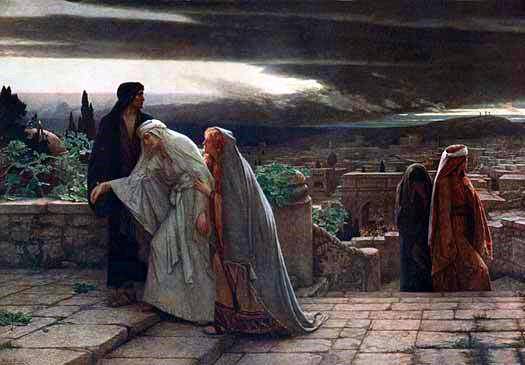
“He never promises an easy way. His own path led up to the hill of Calvary, and terrible was the roughness , but glory lay beyond the cross. So it is with those who follow Christ. The way may be hard and steep, but it leads to the mountains of God .”
A large video collection of classic hymns, contemporary Praise and Worship songs, and the works (audio books, devotional readings, and sermons) of men greatly used of God, such as: Charles Spurgeon, Jonathan Edwards, A.W. Tozer, A.W. Pink, John Owen, Oswald Chambers, Andrew Murray, E.M. Bounds, John Bunyan, George Whitefield, and many more, covering topics on many aspects of the Christian life. May your time spent here be blessed.
http://vid.io/x3F
Charles Bridges – Indeed, he is in trouble, but he is not in Hell!
Psalm 119:75 I know, Lord, that your laws are righteous,
and that in faithfulness you have afflicted me.
Charles Bridges, MA (1794 – 1869), was a preacher and theologian in the Church of England, and a leader of that denomination’s Evangelical Party. As a preacher he was well regarded by his contemporaries, but is remembered today for his literary contributions.
Educated at Queens’ College, Cambridge, he was ordained in 1817 and served from 1823 to 1849 as vicar of Old Newton, Suffolk. Thomas Chalmers wrote,
‘My excellent friend, the Rev. Charles Bridges, of Old Newton, Suffolk, finds, I am sure, most ample occupation among those six hundred people whom he may be said to have domesticated into one parochial family; and, were it not for his still more important services to the Christian church at large, would show, by his incessant labours, how possible it were to make out a most beneficial expenditure of all his strength and all his time amongst them.’
In 1849, he became vicar of Weymouth, Dorset, later serving as vicar of Hinton Martell, Dorset (c. 1857). Bridges participated (with J. C. Ryle) in the Clerical Conference at Weston-super-Mare of 1858, and also participated in the consecration of the Bishop of Carlisle in York Minster in 1860.
Personal life
Bridges was married to Harriet Torlesse, with whom he had at least two sons, the second of whom was physician John Henry Bridges, BA BM Oxon FRCP (1832–1906)
Literary works
At least twenty-four editions of Bridges’ Exposition of Psalm 119 (1827) were published in his lifetime. C. H. Spurgeon considered the commentary to be ‘worth its weight in gold’. Spurgeon also pronounced Bridges’ Exposition of Proverbs (1840) ‘The best work on the Proverbs’.
Bibliography
Exposition of Psalm 119 (1827)
The Christian Ministry (1829)
Memoir of Mary Jane Graham (c. 1834)
Forty-eight Scriptural Studies (1837)
Exposition of Proverbs (1840)
A Manual for the Young (1849)
Exposition of Ecclesiastes (1860)
Correspondence (posthumous, 1870)
A large video collection of classic hymns, contemporary Praise and Worship songs, and the works (audio books, devotional readings, and sermons) of men greatly used of God, such as: Charles Spurgeon, Jonathan Edwards, A.W. Tozer, A.W. Pink, John Owen, Oswald Chambers, Andrew Murray, E.M. Bounds, John Bunyan, George Whitefield, and many more, covering topics on many aspects of the Christian life. May your time spent here be blessed.
http://vid.io/x3F
Charles Spurgeon Sermon – The Desolations of the Lord, the Consolation of His Saints
Nehemiah 12:42 And Maaseiah, and Shemaiah, and Eleazar, and Uzzi, and Jehohanan, and Malchijah, and Elam, and Ezer. And the singers sang loud, with Jezrahiah their overseer. 43 Also that day they offered great sacrifices, and rejoiced: for God had made them rejoice with great joy: the wives also and the children rejoiced: so that the joy of Jerusalem was heard even afar off.
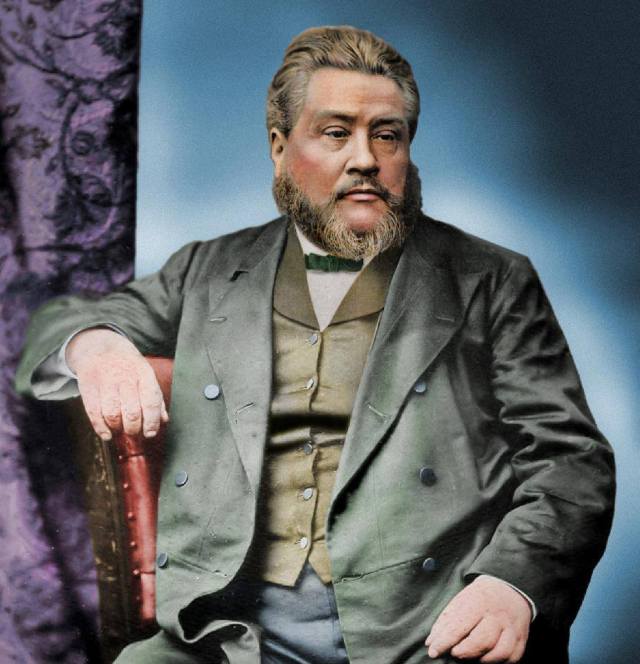
Charles Haddon (C.H.) Spurgeon (June 19, 1834 January 31, 1892) was a British Reformed Baptist preacher who remains highly influential among Christians of different denominations, among whom he is still known as the “Prince of Preachers.” In his lifetime, Spurgeon preached to around 10,000,000 people, often up to 10 times a week at different places. His sermons have been translated into many languages. Spurgeon was the pastor of the New Park Street Chapel in London for 38 years. In 1857, he started a charity organization called Spurgeon’s which now works globally. He also founded Spurgeon’s College, which was named after him after his death.
Spurgeon was a prolific author of many types of works including sermons, an autobiography, a commentary, books on prayer, a devotional, a magazine, and more. Many sermons were transcribed as he spoke and were translated into many languages during his lifetime. Arguably, no other author, Christian or otherwise, has more material in print than C.H. Spurgeon.
“The Lord knows very well that you cannot change your own heart and cannot cleanse your own nature. However, He also knows that he can do both. Hear this and be astonished. He can create you a second time. He can cause you to be born again.”
“We believe, we trust, we hope, and so doing, we stand above the world. We lift up our eyes to the hills which cometh our help. We look towards the east where the dawn breaks. We watch for the morning. Our night watch has been long and weary, but the morning will soon end it. The watching, the waiting and the hoping will then be done, but the loving will be forever.”
“God clothes the lilies every year afresh with their beauty; every year God clothes the tree with its foliage and its fruit. Every day and every hour it is God who maintains the life of all nature, and God created us, that we might be the empty vessels in which He could work out His beauty, His will, His love and the likeness of His blessed Son.”
A large video collection of classic hymns, contemporary Praise and Worship songs, and the works (audio books, devotional readings, and sermons) of men greatly used of God, such as: Charles Spurgeon, Jonathan Edwards, A.W. Tozer, A.W. Pink, John Owen, Oswald Chambers, Andrew Murray, E.M. Bounds, John Bunyan, George Whitefield, and many more, covering topics on many aspects of the Christian life. May your time spent here be blessed.
Proverbs 31:10 Who can find a virtuous woman? for her price is far above rubies.
Matthew Henry was a 17th and early 18th Century minister of the Gospel in Chester, England, and died in 1714. Quoting Charles Spurgeon: “First among the mighty for general usefulness we are bound to mention the man whose name is a household word, Matthew Henry. He is most pious and pithy, sound and sensible, suggestive and sober, terse and trustworthy….”
Matthew Henry – (1662-1714), Calvinist biblical exegete
Matthew Henry was born near Wales on October 18, 1662 and was primarily home-educated by his father, Rev. Philip Henry, and also at the Thomas Doolittle academy from 1680-1682. Henry first started studying law in 1686, but instead of pursuing a career in law he began to preach in his neighborhood.
After the declaration of liberty of conscience by James II in 1687, he was privately ordained in London, and on June 2, 1687, he began his regular ministry as non-conformist pastor of a Presbyterian congregation at Chester. He remained in this position for 25 years. After declining several times offers from London congregations, he finally accepted a call to Hackney, London, and began his ministry there May 18, 1712, shortly before his death.
Henry’s reputation rests upon his renowned commentary, An Exposition of the Old and New Testaments (1708-10, known also as Matthew Henry’s Commentary on the Whole Bible). He lived to complete it only as far as to the end of the Acts, but after his death other like-minded authors prepared the remainder from Henry’s manuscripts. This work was long celebrated as the best English commentary for devotional purposes and the expanded edition was initially published in 1896. Instead of critical exposition, Henry focuses on practical suggestion, and his commentaries contains rich stores of truths. There is also a smaller devotional commentary on the Bible from Henry known as Matthew Henry’s Concise Commentary.
Though Satan should buffet, though trials should come,
Let this blest assurance control,
That Christ has regarded my helpless estate,
And hath shed His own blood for my soul.
A large video collection of classic hymns, contemporary Praise and Worship songs, and the works (audio books, devotional readings, and sermons) of men greatly used of God, such as: Charles Spurgeon, Jonathan Edwards, A.W. Tozer, A.W. Pink, John Owen, Oswald Chambers, Andrew Murray, E.M. Bounds, John Bunyan, George Whitefield, and many more, covering topics on many aspects of the Christian life. May your time spent here be blessed.
http://vid.io/x3F
Sinners in the Hands of an Angry God – Classic Sermon by Jonathan Edwards
Jonathan Edwards – (1703-1758), American puritan theologian and philosopher
Edwards was born in East Windsor, Connecticut, to Timothy Edwards, pastor of East Windsor, and Esther Edwards. The only son in a family of eleven children, he entered Yale in September, 1716 when he was not yet thirteen and graduated four years later (1720) as valedictorian. He received his Masters three years later.
As a youth, Edwards was unable to accept the Calvinist sovereignty of God. He once wrote, “From my childhood up my mind had been full of objections against the doctrine of God’s sovereignty It used to appear like a horrible doctrine to me.” However, in 1721 he came to the conviction, one he called a “delightful conviction.” He was meditating on 1 Timothy 1:17, and later remarked, “As I read the words, there came into my soul, and was as it were diffused through it, a sense of the glory of the Divine Being; a new sense, quite different from any thing I ever experienced before I thought with myself, how excellent a Being that was, and how happy I should be, if I might enjoy that God, and be rapt up to him in heaven; and be as it were swallowed up in him for ever!” From that point on, Edwards delighted in the sovereignty of God. Edwards later recognized this as his conversion to Christ.
In 1727 he was ordained minister at Northampton and assistant to his maternal grandfather, Solomon Stoddard. He was a student minister, not a visiting pastor, his rule being thirteen hours of study a day. In the same year, he married Sarah Pierpont, then age seventeen, daughter of James Pierpont (1659-1714), a founder of Yale, originally called the Collegiate School. In total, Jonathan and Sarah had eleven children.
Solomon Stoddard died on February 11th, 1729, leaving to his grandson the difficult task of the sole ministerial charge of one of the largest and wealthiest congregations in the colony. Throughout his time in Northampton his preaching brought remarkable religious revivals. Jonathan Edwards was a key figure in what has come to be called the First Great Awakening of the 1730s and 1740s.
Yet, tensions flamed as Edwards would not continue his grandfather’s practice of open communion. Stoddard, his grandfather, believed that communion was a “converting ordinance.” Surrounding congregations had been convinced of this, and as Edwards became more convinced that this was harmful, his public disagreement with the idea caused his dismissal in 1750.
Edwards then moved to Stockbridge, Massachusetts, then a frontier settlement, where he ministered to a small congregation and served as missionary to the Housatonic Indians. There, having more time for study and writing, he completed his celebrated work, The Freedom of the Will (1754).
Edwards was elected president of the College of New Jersey (later Princeton University) in early 1758. He was a popular choice, for he had been a friend of the College since its inception and was the most eminent American philosopher-theologian of his time. On March 22, 1758, he died of fever at the age of fifty-four following experimental inoculation for smallpox and was buried in the President’s Lot in the Princeton cemetery beside his son-in-law, Aaron Burr.
Deuteronomy 32:35 (King James Version)
35To me belongeth vengeance and recompence; their foot shall slide in due time: for the day of their calamity is at hand, and the things that shall come upon them make haste.
A large video collection of classic hymns, contemporary Praise and Worship songs, and the works (audio books, devotional readings, and sermons) of men greatly used of God, such as: Charles Spurgeon, Jonathan Edwards, A.W. Tozer, A.W. Pink, John Owen, Oswald Chambers, Andrew Murray, E.M. Bounds, John Bunyan, George Whitefield, and many more, covering topics on many aspects of the Christian life. May your time spent here be blessed.
http://vid.io/x3F
Andrew Murray – Working for God / Bearing Fruit in every Good Work (12/31)
Andrew Murray wrote “Working for God”, a book of daily meditations for a month, as a sequel to “Waiting on God”. The object of the book is, in Murray’s own words, to remind all Christian workers of the greatness and the glory of the work in which God gives a share. It is the work of bringing people back to God — but it must be done in God’s way and in God’s power. It is spiritual work, to be done by spiritual people. In this book we find valuable insights into the calling that all Christians have, to work for the Lord in some capacity or other. We also find how God’s grace is sufficient, and that He can and will enable us to have fruitful lives; we really can trust God to show us how we can work effectively in His kingdom, perhaps in ways and with resources that we have not yet imagined! – Summary by Christopher Smith
Andrew Murray – (1828-1917), South-African Dutch Reformed leader, author of devotional writings
Murray was Born in Cape Town, South Africa, Murray became a noted missionary leader. His father was a Scottish Presbyterian serving the Dutch Reformed Church of South Africa, and his mother had connections with both French Huguenots and German Lutherans. This background to some extent explains his ecumenical spirit. He was educated at Aberdeen University, Scotland, and at Utrecht University in the Netherlands. After ordination in 1848 he served pastorates at Bloemfontein, Worcester, Cape Town, and Wellington. He helped to found what are now the University College of the Orange Free State and the Stellenbosch Seminary He served as Moderator of the Cape Synod of the Dutch Reformed Church and was president of both the YMCA (1865) and the South Africa General Mission (1888-1917), now the Africa Evangelical Fellowship.
He was one of the chief promoters of the call to missions in South Africa. This led to the Dutch Reformed Church missions to blacks in the Transvaal and Malawi. Apart from his evangelistic tours in South Africa, he spoke at the Keswick and Northfield Conventions in 1895, making a great impression. upon his British and American audiences. For his contribution to world missions he was given an honorary doctorate by the universities of Aberdeen (1898) and Cape of Good Hope(1907).
Murray is best known today for his devotional writings, which place great emphasis on the need for a rich, personal devotional life. Many of his 240 publications explain in how he saw this devotion and its outworking in the life of the Christian. Several of his books have become devotional classics. Among these are Abide in Christ, Absolute Surrender, With Christ in the School of Prayer, The Spirit of Christ and Waiting on God.