

“God takes away the world, that the heart may cleave more to Him in sincerity.”
– Thomas Watson
“God takes away the world, that the heart may cleave more to Him in sincerity.”
– Thomas Watson
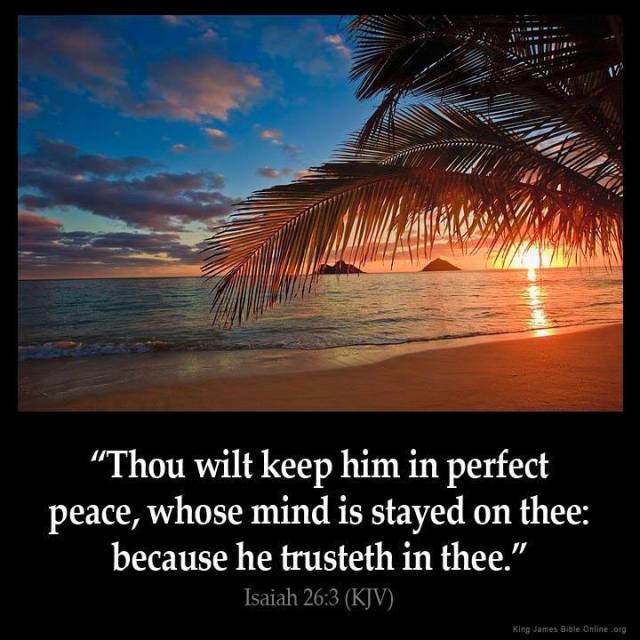
“Holy thoughts in the heart transfigure the life. Your daily thoughts build up your character. Our hearts are the quarries where the blocks are fashioned which we build into our life temple. If our thoughts and meditations are good, beautiful, true, pure, loving and gentle, our life will grow into Christ likeness. The same love, warm, tender, earnest, glowing in the heart year after year, will transfigure any life into heavenly beauty.”
– J. R. Miller: In Green Pastures

“And then shall many be offended, and shall betray one another, and shall hate one another.” (Mat 24:10)
The malignity of others. When persecution is in fashion, envy, enmity, and malice, are strangely diffused into the minds of men by contagion: and charity, tenderness, and moderation, are looked upon as singularities, which make a man like a speckled bird. Then they shall betray one another, that is,”Those that have treacherously deserted their religion, shall hate and betray those who adhere to it, for whom they have pretended friendship.’’
Apostates have commonly been the most bitter and violent persecutors. Note, Persecuting times are discovering times. Wolves in sheep’s clothing will then throw off their disguise, and appear wolves: they shall betray one another, and hate one another. The times must needs be perilous, when treachery and hatred, two of the worst things that can be, because directly contrary to two of the best (truth and love), shall have the ascendant.
– Matthew Henry

“Humility and love are precisely the graces which the men of the world can understand, if they do not comprehend doctrines. They are the graces about which there is no mystery, and they are within reach of all classes. The poorest Christian can every day find occasion for practicing love and humility.”
– J.C. Ryle
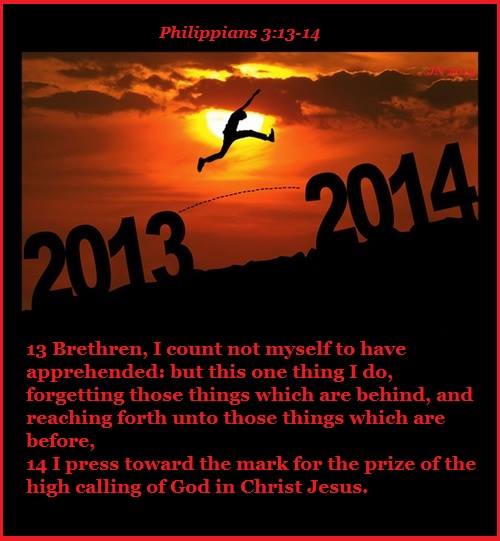
Philippians 3:20 For our conversation is in heaven; from whence also we look for the Saviour, the Lord Jesus Christ
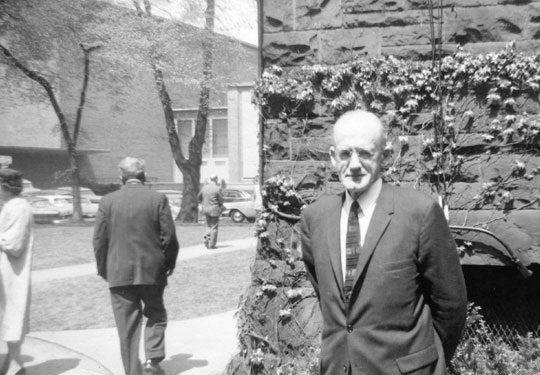
“It is astonishing, how many difficulties clear up without any effort when the inner life gets straightened out. If half the time we spend trying to fix up outward things were spent in getting our hearts right, we would be delighted with the result. Strange as it may seem, harmony within our hearts depends mostly upon our getting into harmony with God.”
– A. W. Tozer

“The Christian knows no change with regard to God. He may be rich today and poor tomorrow, he may be sickly today and well tomorrow, he may be in happiness today, tomorrow he may be distressed. but there is no change with regard to his relationship to God. If He loved me yesterday, He loves me today. My unmoving mansion of rest is my blessed Lord.”
– Charles Spurgeon: Strengthen My Spirit
Resolutions Audio Reading Text
Jonathan Edwards playlist: http://www.youtube.com/view_play_list?p=C71D542019FB8E60
“Being sensible that I am unable to do anything without God’s help, I do humbly entreat him by his grace to enable me to keep these Resolutions, so far as they are agreeable to his will, for Christ’s sake…Remember to read over these Resolutions once a week.”
– Jonathan Edwards
Jonathan Edwards – (1703-1758), American puritan theologian and philosopher
Edwards was born in East Windsor, Connecticut, to Timothy Edwards, pastor of East Windsor, and Esther Edwards. The only son in a family of eleven children, he entered Yale in September, 1716 when he was not yet thirteen and graduated four years later (1720) as valedictorian. He received his Masters three years later.
As a youth, Edwards was unable to accept the Calvinist sovereignty of God. He once wrote, “From my childhood up my mind had been full of objections against the doctrine of God’s sovereignty It used to appear like a horrible doctrine to me.” However, in 1721 he came to the conviction, one he called a “delightful conviction.” He was meditating on 1 Timothy 1:17, and later remarked, “As I read the words, there came into my soul, and was as it were diffused through it, a sense of the glory of the Divine Being; a new sense, quite different from any thing I ever experienced before I thought with myself, how excellent a Being that was, and how happy I should be, if I might enjoy that God, and be rapt up to him in heaven; and be as it were swallowed up in him for ever!” From that point on, Edwards delighted in the sovereignty of God. Edwards later recognized this as his conversion to Christ.
In 1727 he was ordained minister at Northampton and assistant to his maternal grandfather, Solomon Stoddard. He was a student minister, not a visiting pastor, his rule being thirteen hours of study a day. In the same year, he married Sarah Pierpont, then age seventeen, daughter of James Pierpont (1659-1714), a founder of Yale, originally called the Collegiate School. In total, Jonathan and Sarah had eleven children.
Solomon Stoddard died on February 11th, 1729, leaving to his grandson the difficult task of the sole ministerial charge of one of the largest and wealthiest congregations in the colony. Throughout his time in Northampton his preaching brought remarkable religious revivals. Jonathan Edwards was a key figure in what has come to be called the First Great Awakening of the 1730s and 1740s.
Yet, tensions flamed as Edwards would not continue his grandfather’s practice of open communion. Stoddard, his grandfather, believed that communion was a “converting ordinance.” Surrounding congregations had been convinced of this, and as Edwards became more convinced that this was harmful, his public disagreement with the idea caused his dismissal in 1750.
Edwards then moved to Stockbridge, Massachusetts, then a frontier settlement, where he ministered to a small congregation and served as missionary to the Housatonic Indians. There, having more time for study and writing, he completed his celebrated work, The Freedom of the Will (1754).
Edwards was elected president of the College of New Jersey (later Princeton University) in early 1758. He was a popular choice, for he had been a friend of the College since its inception and was the most eminent American philosopher-theologian of his time. On March 22, 1758, he died of fever at the age of fifty-four following experimental inoculation for smallpox and was buried in the President’s Lot in the Princeton cemetery beside his son-in-law, Aaron Burr.
Octavius Winslow – All Is Transparent and Harmonious to His Eye
Octavius Winslow playlist: http://www.youtube.com/view_play_list?p=0434F5E3E1C7DED8
Link to my “Christian Devotional Readings” Facebook page: https://www.facebook.com/pages/Christian-Devotional-Readings/196846270398160?ref=hl
A Treasury of Ageless,
Sovereign Grace,
Devotional Writings http://www.gracegems.org/
Ephesians 1:11 “…the purpose of Him who works all things according to the counsel of His will”
Mary and Thomas Winslow went on to live in England and Octavius was born in Pentonville, then a village near London, on August 1, 1808. He was the tenth of 13 children. His name seems to have been given because he was then the eighth surviving child. Octavius’s father was from a wealthy family but by 1815, following his retirement from the army, he suffered ill-health and the loss of his fortune due to one of several such national financial disasters that occurred in this period. A decision was made to move to America, but before Mr Winslow could join his wife and children in New York, he died. At the same time, their youngest child died too.
Widowed at 40, responsible for a large family and scarcely settled in America, Mrs Winslow’s entire life was turned upside down. Worst of all, spiritual darkness and despondency overwhelmed her for some months. Octavius was seven years old. They were a deeply religious family and Octavius later wrote a book about their experiences from his mother’s perspective in a book entitled Life in Jesus, available on google books. All of the children became Christians, and three sons became evangelical ministers.
It is suggested that Winslow began his ministerial training in Stepney, London, but then moved to Columbia College, New York. He was certainly ordained as a pastor June 21,1833 (aged 25) in New York. He is said to have ministered in the newly started Second Baptist Church there in Brooklyn, in 1836 and 1837, the work sadly closing in 1838. In 1839 he moved back to England where he became one of the most valued ministers of the time. This was largely due to the earnestness of his preaching and the excellence of his prolific writings.
He was married to a Miss Ann Ring and they had four boys and four girls. His son, John Whitmore, died in 1856 aged only 21 and Octavius went on to publish some of the things he had written as a teenager.


