“It is the consciousness of the threefold joy of the Lord, His joy in ransoming us, His joy in dwelling within us as our Saviour and Power for fruitbearing and His joy in possessing us, as His Bride and His delight; it is the consciousness of this joy which is our real strength. Our joy in Him may be a fluctuating thing: His joy in us knows no change.”
“To say ‘You don’t need theology to save a soul’ is like saying ‘What is the good of a foundation? what we want is a house. The good of the foundation is that when the storms come nothing can wreck the ‘house’ that is built on the foundation (see Matthew 7:24-27).”
Confessions (Latin: Confessiones) is the name of an autobiographical work, consisting of 13 books, by St. Augustine of Hippo, written between AD 397 and AD 398. Modern English translations of it are sometimes published under the title The Confessions of St. Augustine in order to distinguish the book from other books with similar titles.
The work outlines Augustine’s sinful youth and his conversion to Christianity. It is widely seen as the first Western autobiography ever written, and was an influential model for Christian writers throughout the following 1000 years of the Middle Ages. It is not a complete autobiography, as it was written in his early 40s, and he lived long afterwards, producing another important work (City of God); it does, nonetheless, provide an unbroken record of his development of thought and is the most complete record of any single person from the 4th and 5th centuries. It is a significant theological work. In the work St. Augustine writes about how much he regrets having led a sinful and immoral life. He discusses his regrets for following the Manichaean religion and believing in astrology. He writes about Nebridius’s role in helping to persuade him that astrology was not only incorrect but evil, and St. Ambrose’s role in his conversion to Christianity. He shows intense sorrow for his sexual sins, and writes on the importance of sexual morality. The book is thought to be divisible into chapters which symbolize various aspects of the Trinity and trinitarian belief.
St. Augustine – (354-430), Bishop of Hippo and “Doctor of the Church”
Accepted by most scholars to be the most important figure in the ancient Western church, St. Augustine was born in Tagaste, Numidia in North Africa. His mother was a Christian, but his father remained a pagan until late in life. After a rather unremarkable childhood, marred only by a case of stealing pears, Augustine drifted through several philosophical systems before converting to Christianity at the age of thirty-one. At the age of nineteen, Augustine read Cicero’s Hortensius, an experience that led him into the fascination with philosophical questions and methods that would remain with him throughout his life. After a few years as a Manichean, he became attracted to the more skeptical positions of the Academic philosophers. Although tempted in the direction of Christianity upon his arrival at Milan in 383, he turned first to neoplatonism, During this time, Augustine fathered a child by a mistress. This period of exploration, including its youthful excesses (perhaps somewhat exaggerated) are recorded in Augustine’s most widely read work, the Confessions.
During his youth, Augustine had studied rhetoric at Carthage, a discipline that he used to gain employment teaching in Carthage and then in Rome and Milan, where he met Ambrose who is credited with effecting Augustine’s conversion and who baptized Augustine in 387. Returning to his homeland soon after his conversion, he was ordained a presbyter in 391, taking the position as bishop of Hippo in 396, a position which he held until his death.
Besides the Confessions, Augustine’s most celebrated work is his De Civitate Dei (On the City of God), a study of the relationship between Christianity and secular society, which was inspired by the fall of Rome to the Visigoths in 410. Among his other works, many are polemical attacks on various heresies: Against Faustus, the Manichean; On Baptism; Against the Donatists; and many attacks on Pelagianism and Semi-Pelagianism. Other works include treatises On the Trinity; On Faith, Hope, and Love; On Christian Doctrine; and some early dialogues.
St. Augustine stands as a powerful advocate for orthodoxy and of the episcopacy as the sole means for the dispensing of saving grace. In the light of later scholarship, Augustine can be seen to serve as a bridge between the ancient and medieval worlds. A review of his life and work, however, shows him as an active mind engaging the practical concerns of the churches he served.
To follow Jesus Christ to-day is to follow a madman according to the ideals of present-day civilisation. We have the idea that our civilisation is God-ordained, whereas it has been built up by ourselves. We have made a thousand and one necessities until our system of civilised life is as cast iron, and then we apologise to the Lord for not following Him. “God can never mean that I have to follow Him at the cost of all I have?” But He does mean it. Instantly the clash is between our civilisation and the call of Jesus Christ. Read the Sermon on the Mount—“Seek ye first the kingdom of God”—and apply it to modern life and you will find its statements are either those of a madman or of God Incarnate.
The book entitled Imitation of Christ by Thomas à Kempis is exquisitely beautiful, but fundamentally twisted, because Our Lord’s own message of regeneration is ignored. Many a one who has started the imitation of Christ has had to abandon it as hopeless because a strain is put on human nature that human nature cannot begin to live up to. To have attitudes of life without the life itself is a fraud; to have the life itself imitating the best Pattern of that life is normal and right (see 1 Peter 2:21-23). The teaching of Jesus Christ applies only to the life He puts in, and the marvel of His Redemption is that He gives the power of His own disposition to carry any man through who is willing to obey Him.
“In every thing by prayer and supplication with thanksgiving let your requests be made known unto God” (Phil. 4:6).
A.W. Pink (1886-1952): Pastor, itinerate Bible teacher, author of Studies in the Scriptures and many books including his well-known The
Sovereignty of God; born in Great Britain, immigrated to the U.S., and later returned to his homeland in 1934; born in Nottingham, England.
Matthew 11:29 Take my yoke upon you and learn from me, for I am gentle and humble in heart, and you will find rest for your souls. 30 For my yoke is easy and my burden is light.”
Psalm 23
1 The Lord is my shepherd;
I shall not want.
2 He makes me to lie down in green pastures;
He leads me beside the still waters.
3 He restores my soul;
He leads me in the paths of righteousness
For His name’s sake.
4 Yea, though I walk through the valley of the shadow of death,
I will fear no evil;
For You are with me;
Your rod and Your staff, they comfort me.
5 You prepare a table before me in the presence of my enemies;
You anoint my head with oil;
My cup runs over.
6 Surely goodness and mercy shall follow me
All the days of my life;
And I will dwell in the house of the Lord
Forever.
James Smith was a predecessor of Charles Spurgeon at New Park Street Chapel in London from 1841 until 1850. Early on, Smith’s readings were even more popular than Spurgeon’s!
The habit of laying up a text of Scripture in the morning, to be meditated upon while engaged in the business of this world through the day—is both profitable and delightful. It is as a refreshing draught to a weary traveler!
The Amen, the faithful and true Witness, the Beginning of the creation of God, says this:
15 ‘ I know your deeds, that you are neither cold nor hot; I wish that you were cold or hot. 16 So because you are lukewarm, and neither hot nor cold, I will spit you out of My mouth. 17 Because you say, ” I am rich, and have become wealthy, and have need of nothing,” and you do not know that you are wretched and miserable and poor and blind and naked, 18 I advise you to buy from Me gold refined by fire so that you may become rich, and white garments so that you may clothe yourself, and that the shame of your nakedness will not be revealed; and eye salve to anoint your eyes so that you may see. 19 Those whom I love, I reprove and discipline; therefore be zealous and repent. 20 Behold, I stand at the door and knock; if anyone hears My voice and opens the door, I will come in to him and will dine with him, and he with Me. 21 He who overcomes, I will grant to him to sit down with Me on My throne, as I also overcame and sat down with My Father on His throne. 22 He who has an ear, let him hear what the Spirit says to the churches.'”
Which way do our thoughts move with most pleasure? Which way go our plans and contrivances? Are we most wise for the world, or for our souls? Those that live in pleasure are dead, 1Ti 5:6.
“The superlative beauty of Jesus is all-attracting. It is not so much to be admired as to be loved. He is more than pleasant and fair; He is lovely. His whole life we would imitate; His whole character we would copy. In all other things we some lack; in Him there is all perfection. Christ Jesus is gold without alloy, light without darkness, glory without cloud.”
Proverbs 15:23 A man hath joy by the answer of his mouth: and a word spoken in due season, how good is it!
Luke 12:42 And the Lord said, Who then is that faithful and wise steward, whom his lord shall make ruler over his household, to give them their portion of meat in due season?
Author: Watson, Thomas (1620-1686)
The Apostle Paul, in Phil. 4:11, says “I am not saying this because I am in need, for I have learned to be content whatever the circumstances.” Thomas Watson, an English Puritan preacher, wants to teach readers how to gain the same contentment as Paul. Living in the 16th century, Watson believed that discontentment was a sin, and so wrote the book The Art of Divine Contentment: An Exposition of Philippians 4:11. Watson spends the entire book on this one verse, and in doing so, presents Christians with a comprehensive method for becoming content. Centered on the idea that “A gracious spirit is a contented spirit,” Watson believes that Christians can be and should be content because of God’s wonderful promises to his people. “The way for a man to be contented,” Watson says, “is not by raising his estate higher, but by bringing his heart lower.” In our contemporary society where discontent is the norm, disillusioned readers will benefit from The Art of Divine Contentment. Watson’s content is God-centered rather than focused on material possessions as so many Christians are today, so it is sure to bring comfort to those who strive to be happy in Christ.


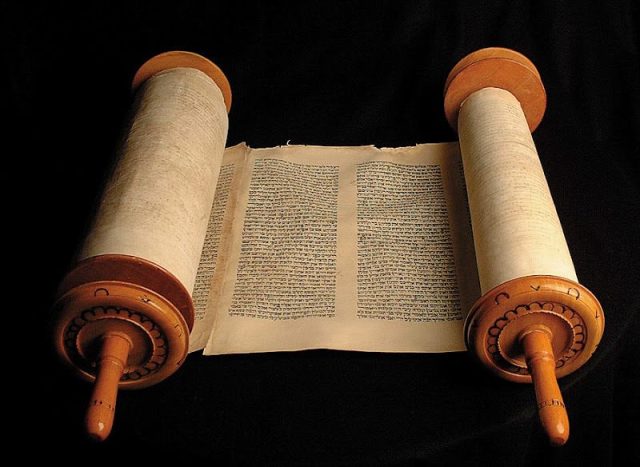


Wise for the World, or for our Souls? – Matthew Henry
Which way do our thoughts move with most pleasure? Which way go our plans and contrivances? Are we most wise for the world, or for our souls? Those that live in pleasure are dead, 1Ti 5:6.
– Matthew Henry
https://www.facebook.com/ChristianDevotionalReadings
Share this: