John Flavel (1628-1691)
Excerpt from Meet the Puritans
by Dr. Joel Beeke and Randall J. Pederson
John Flavel (or Flavell) was born in 1628 in Bromsgrove, Worcestershire. He was the son of Richard Flavel, a minister who died of the plague in 1665 while in prison for nonconformity. John Flavel was educated by his father in the ways of religion, then “plied his studies hard” as a commoner at University College, Oxford. In 1650, he was ordained by the presbytery at Salisbury. He settled in Diptford, where he honed his numerous gifts.
He married Joan Randall, a godly woman, who died while giving birth to their first child in 1655. The baby died as well. After a year of mourning, Flavel married Elizabeth Stapell and was again blessed with a close, God-fearing marriage, as well as children.
In 1656, Flavel accepted a call to be minister in the thriving seaport of Dartmouth. He earned a smaller income there, but his work was more profitable; many were converted. One of his parishioners wrote of Flavel, “I could say much, though not enough of the excellency of his preaching; of his seasonable, suitable, and spiritual matter; of his plain expositions of Scripture; his talking method, his genuine and natural deductions, his convincing arguments, his clear and powerful demonstrations, his heart-searching applications, and his comfortable supports to those that were afflicted in conscience. In short, that person must have a very soft head, or a very hard heart, or both, that could sit under his ministry unaffected” (Erasmus Middleton, Evangelical Biography, 4:50-51).
Flavel was ejected from the pulpit in 1662 for nonconformity, but he continued to meet secretly with his parishioners in conventicles. On occasion, he would preach for them in the woods, especially on days of fasting and humiliation. Once he even disguised himself as a woman on horseback in order to reach a secret meeting place where he preached and administered baptism. At another time, when pursued by authorities, he plunged his horse into the sea and managed to escape arrest by swimming through a rocky area to reach Slapton Sands.
In 1672, King Charles II issued the Declaration of Indulgence, giving Nonconformists freedom to worship. Flavel returned to Dartmouth, licensed as a Congregationalist. When the indulgence was canceled the following year, Flavel once more resorted to preaching secretly in private homes, secluded neighborhoods, or remote forests. Flavel’s second wife died during this time and he married Ann Downe, a minister’s daughter. They were happily married for eleven years, and had two sons.
In the late 1670s and early 1680s, Flavel carried on his ministry mainly by writing. He published at least nine books in this period. In the summer of 1682, he was forced to seek safety in London, where he joined the congregation of his friend, William Jenkyn, known today for his commentary on Jude. In 1684, soldiers interrupted a prayer service Flavel was conducting with Jenkyn. Flavel narrowly escaped arrest. During his stay in London, Flavel’s third wife died. He married Dorothy, a widowed daughter of George Jefferies, minister of Kingsbridge; she survived him.
Flavel was humble, godly, and learned. He spent much time in study and prayer. One of his children wrote, “He was always full and copious in prayer, seemed constantly to exceed himself, and rarely made use twice of the same expressions.” He was well versed in church discipline, infant baptism, and a number of Oriental languages.
Flavel’s power as a preacher came out of his depth of spiritual experience. He spent many hours in meditation and self-examination. As Middleton writes, “He [Flavel] attained to a well-grounded assurance, the ravishing comforts of which were many times shed abroad in his soul; this made him a powerful and successful preacher, as one who spoke from his own heart to those of others. He preached what he felt, and what he had handled, what he had seen and tasted of the word of life and they felt it also” (ibid., p. 58).
While meditating on heaven on one occasion, Flavel was so overcome with heavenly joy that he lost sight of this world. Stopping his horse by a spring, he viewed death as the most amiable face he had ever seen, except that of Christ’s, who made it so. When he finally arrived at an inn, the innkeeper said to him, “Sir, what is the matter with you? You look like a dead man.” “Friend,” Flavel replied, “I was never better in my life.” Years later, Flavel said that he understood more of heaven from that experience than from all the books he had ever read and all the sermons he had ever heard on the subject.
The Treasury of David is the most exhaustive commentary on the book of Psalms available, written by C. H. Spurgeon and commonly regarded as his magnum opus.
Treasury of David
Bible commentary on every verse in every chapter of Psalms.
Spurgeon’s expository comments help the reader in his understanding of Scripture.
Frequent “Explanatory notes and quaint sayings” offer helpful insights from many different Bible teachers throughout history on each Psalm.
“Hints to the village preacher” aid in preparing Bible studies and sermons.
The Treasury of David took Spurgeon 15 years to complete. It was originally published in installments, until finally made available in a seven volume set.
The complete unabridged work is part of the SwordSearcher Deluxe Bible Study Library, with commentary on any verse of the Psalms just a click away. As with any library resource in SwordSearcher, the entire text can be searched instantaneously for any word or phrase.
“The delightful study of the Psalms has yielded me boundless profit and ever-growing pleasure; common gratitude constrains me to communicate to others a portion of the benefit, with the prayer that it may induce them to search further for themselves.”
-C. H. Spurgeon, from the Preface.
C. H. Spurgeon – Baptist preacher
The descendant of several generations of Independent ministers, he was born at Kelvedon, Essex, and became a Baptist in 1850. In the same year he preached his first sermon, and in 1852 he was appointed paster of the Baptist congregation at Waterbeach. In 1854 he went to Southwark, where his sermons drew such crowds that a new church, the Metropolitan Tabernacle in Newington Causeway, had to be built for him. Apart from his preaching activites he founded a pastors’ college, an orphanage, and a colportage association for the propagation of uplifting literature. Spurgeon was a strong Calvinist. He had a controversy in 1864 with the Evangelical party of the Church of England for remaining in a Church that taught Baptismal Regeneration, and also estranged considerable sections of his own community by rigid opposition to the more liberal methods of Biblical exegesis. These differences led to a rupture with the Baptist Union in 1887. He owed his fame as a preacher to his great oratorical gifts, humour, and shrewd common sense, which showed itself especially in his treatment of contemporary problems. Among his works are The Saint and his Saviour (1857), Commenting and Commentaries (1876) and numerous volumes of sermons (translated into many languages).
Charles Haddon (C.H.) Spurgeon (June 19, 1834 January 31, 1892) was a British Reformed Baptist preacher who remains highly influential among Christians of different denominations, among whom he is still known as the “Prince of Preachers.” In his lifetime, Spurgeon preached to around 10,000,000 people, often up to 10 times a week at different places. His sermons have been translated into many languages. Spurgeon was the pastor of the New Park Street Chapel in London for 38 years. In 1857, he started a charity organization called Spurgeon’s which now works globally. He also founded Spurgeon’s College, which was named after him after his death.
Spurgeon was a prolific author of many types of works including sermons, an autobiography, a commentary, books on prayer, a devotional, a magazine, and more. Many sermons were transcribed as he spoke and were translated into many languages during his lifetime. Arguably, no other author, Christian or otherwise, has more material in print than C.H. Spurgeon.
Treasury of David: Commentary on Psalm 1 – C.H. Spurgeon ( Audio Reading )
Thomas Brooks (1608-1680), Nonconformist Puritan preacher and author.
Thomas Brooks was born in 1608. He entered Emmanuel College, Cambridge, in 1625, where such New England Puritans as Thomas Hooker, John Cotton, and Thomas Shepard were also educated, but he appears to have left before graduating. Brooks was ordained as a preacher of the gospel in 1640 and became a chaplain to the parliamentary fleet, serving for some years at sea. That ministry is mentioned in some of his “sea-devotions” as well as his statement: “I have been some years at sea and through grace I can say that I would not exchange my sea experiences for England’s riches.”
After the Civil War, Brooks became minister at the church of St. Thomas the Apostle, Queen Street, London (1648-1651). He was often called to preach before Parliament. In 1652, he became rector of St. Margaret’s, New Fish Street Hill, which was the first church that burned to the ground in the Great Fire of London (1666). Like Thomas Goodwin and John Owen, Brooks preferred the Congregational view of church government. In 1662, he fell victim to the notorious Act of Uniformity.
After being ejected from his living, Brooks continued to preach in London, where he apparently suffered little persecution. He became minister of a congregation at Moorfields, near St. Margaret’s. Unlike many ministers, he stayed in London during the Great Plague of 1665, faithfully tending his flock. In 1672, he was licensed to preach according to the terms of the Declaration of Indulgence, but that license was revoked in 1676.
Brooks lost his first wife, Martha Burgess, a godly woman whom he greatly treasured, in 1676. He wrote of her, “She was always best when she was most with God in a corner. She has many a whole day been pouring out her soul before God for the nation, for Zion, and the great concerns of her own soul.” He later married a young God-fearing woman named Patience Cartwright (Alexander Grosart puts it succinctly: “she spring-young, he winter-old” [Works of Brooks, 1:xxxv]), who proved a most worthy companion.
Brooks died in 1680 and was buried in Bunhill Fields, London’s famous nonconformist cemetery. John Reeve, who preached at the funeral, said Brooks had “a sweet nature, great gravity, large charity, wonderful patience, and strong faith.”
Arthur Walkington Pink (1886-1952) evangelist and Biblical scholar
Pink was born in Nottingham, England on April 1, 1886 and became a Christian in his early 20’s. Though born to Christian parents, prior to conversion he migrated into a Theosophical society (an occult gnostic group popular in England during that time), and quickly rose in prominence within their ranks. His conversion came from his father’s patient admonitions from Scripture. It was the verse, Proverbs 14:12, ‘there is a way which seems right to a man, but its end is the way of death,’ which particularly struck his heart and compelled him to renounce Theosophy and follow Jesus.
Desiring to grow in knowledge of the Bible, Pink immigrated to the United States to study at Moody Bible Institute. In 1916 he married Vera E. Russell, who was from Kentucky. However, he left after just two months for Colorado, then California, then Britain. From 1925 to 1928 he served in Australia, including as pastor of two congregations from 1926 to 1928, when he returned to England, and to the United States the following year. He eventually pastored churches Colorado, California, Kentucky and South Carolina.
In 1922 he started a monthly magazine entitled Studies in Scriptures which circulated among English-speaking Christians worldwide, though only to a relatively small circulation list of around 1,000.
In 1934 Pink returned to England, and within a few years turned his Christian service to writing books and pamphlets. Pink died in Stornoway, Scotland on July 15, 1952. The cause of death was anemia.
After Pink’s death, his works were republished by the Banner of Truth Trust and reached a much wider audience as a result. Biographer Iain Murray observes of Pink, “the widespread circulation of his writings after his death made him one of the most influential evangelical authors in the second half of the twentieth century.” His writing sparked a revival of expository preaching and focused readers’ hearts on biblical living.
The Secrets of Temporal Felicity – A.W. Pink
1 Thessalonians 4
1 As for other matters, brothers and sisters, we instructed you how to live in order to please God, as in fact you are living. Now we ask you and urge you in the Lord Jesus to do this more and more. 2 For you know what instructions we gave you by the authority of the Lord Jesus.
Joshua 1:8 Keep this Book of the Law always on your lips; meditate on it day and night, so that you may be careful to do everything written in it. Then you will be prosperous and successful.
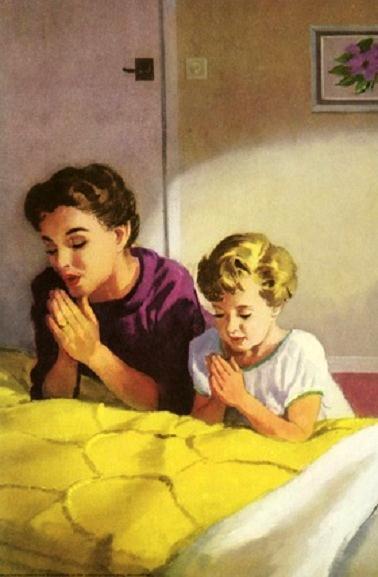
“If you neglect to instruct (your children) in the way of holiness, will the devil neglect to instruct them in the way of wickedness? No; if you will not teach them to pray, he will to curse, swear, and lie; if ground be uncultivated, weeds will spring.”
“Naturally, men are prone to spin themselves a web of opinions out of their own brain, and to have a religion that may be called their own. They are far readier to make themselves a faith, than to receive that which God hath formed to their hands; are far readier to receive a doctrine that tends to their carnal commodity, or honor, or delight, than one that tends to self-denial.”
But seek ye first the kingdom of God, and his righteousness; and all these things shall be added unto you. Mat 6:33
Matthew Henry (1662-1714) was a 17th and early 18th Century minister of the Gospel and Calvinist biblical exegete in Chester, England, and died in 1714. Quoting Charles Spurgeon: “First among the mighty for general usefulness we are bound to mention the man whose name is a household word, Matthew Henry. He is most pious and pithy, sound and sensible, suggestive and sober, terse and trustworthy….”
He was born near Wales on October 18, 1662 and was primarily home-educated by his father, Rev. Philip Henry, and also at the Thomas Doolittle academy from 1680-1682. He first started studying law in 1686, but instead of pursuing a career in law he began to preach in his neighborhood.
After the declaration of liberty of conscience by James II in 1687, he was privately ordained in London, and on June 2, 1687, he began his regular ministry as non-conformist pastor of a Presbyterian congregation at Chester. He remained in this position for 25 years. After declining several times offers from London congregations, he finally accepted a call to Hackney, London, and began his ministry there May 18, 1712, shortly before his death.
His reputation rests upon his renowned commentary, An Exposition of the Old and New Testaments (1708-10, known also as Matthew Henry’s Commentary on the Whole Bible). He lived to complete it only as far as to the end of the Acts, but after his death other like-minded authors prepared the remainder from his manuscripts. This work was long celebrated as the best English commentary for devotional purposes and the expanded edition was initially published in 1896. Instead of critical exposition, his focuses on practical suggestion, and his commentaries contains rich stores of truths. There is also a smaller devotional commentary on the Bible from Henry known as Matthew Henry’s Concise Commentary.



Treasury of David: Commentary on Psalm 1 – C.H. Spurgeon ( Audio Reading )
Treasury of David: Commentary on Psalms – C.H. Spurgeon playlist: http://www.youtube.com/view_play_list?p=348048FBD9CF9258
Spurgeon Sermons playlist: http://www.youtube.com/view_play_list?p=CDB844A9113F938C
The Treasury of David is the most exhaustive commentary on the book of Psalms available, written by C. H. Spurgeon and commonly regarded as his magnum opus.
Treasury of David
Bible commentary on every verse in every chapter of Psalms.
Spurgeon’s expository comments help the reader in his understanding of Scripture.
Frequent “Explanatory notes and quaint sayings” offer helpful insights from many different Bible teachers throughout history on each Psalm.
“Hints to the village preacher” aid in preparing Bible studies and sermons.
The Treasury of David took Spurgeon 15 years to complete. It was originally published in installments, until finally made available in a seven volume set.
The complete unabridged work is part of the SwordSearcher Deluxe Bible Study Library, with commentary on any verse of the Psalms just a click away. As with any library resource in SwordSearcher, the entire text can be searched instantaneously for any word or phrase.
“The delightful study of the Psalms has yielded me boundless profit and ever-growing pleasure; common gratitude constrains me to communicate to others a portion of the benefit, with the prayer that it may induce them to search further for themselves.”
-C. H. Spurgeon, from the Preface.
C. H. Spurgeon – Baptist preacher
The descendant of several generations of Independent ministers, he was born at Kelvedon, Essex, and became a Baptist in 1850. In the same year he preached his first sermon, and in 1852 he was appointed paster of the Baptist congregation at Waterbeach. In 1854 he went to Southwark, where his sermons drew such crowds that a new church, the Metropolitan Tabernacle in Newington Causeway, had to be built for him. Apart from his preaching activites he founded a pastors’ college, an orphanage, and a colportage association for the propagation of uplifting literature. Spurgeon was a strong Calvinist. He had a controversy in 1864 with the Evangelical party of the Church of England for remaining in a Church that taught Baptismal Regeneration, and also estranged considerable sections of his own community by rigid opposition to the more liberal methods of Biblical exegesis. These differences led to a rupture with the Baptist Union in 1887. He owed his fame as a preacher to his great oratorical gifts, humour, and shrewd common sense, which showed itself especially in his treatment of contemporary problems. Among his works are The Saint and his Saviour (1857), Commenting and Commentaries (1876) and numerous volumes of sermons (translated into many languages).
Charles Haddon (C.H.) Spurgeon (June 19, 1834 January 31, 1892) was a British Reformed Baptist preacher who remains highly influential among Christians of different denominations, among whom he is still known as the “Prince of Preachers.” In his lifetime, Spurgeon preached to around 10,000,000 people, often up to 10 times a week at different places. His sermons have been translated into many languages. Spurgeon was the pastor of the New Park Street Chapel in London for 38 years. In 1857, he started a charity organization called Spurgeon’s which now works globally. He also founded Spurgeon’s College, which was named after him after his death.
Spurgeon was a prolific author of many types of works including sermons, an autobiography, a commentary, books on prayer, a devotional, a magazine, and more. Many sermons were transcribed as he spoke and were translated into many languages during his lifetime. Arguably, no other author, Christian or otherwise, has more material in print than C.H. Spurgeon.
Treasury of David: Commentary on Psalm 1 – C.H. Spurgeon ( Audio Reading )
http://www.youtube.com/user/stack45ny
Share this: