“The words of our Lord sound from those blessed Palestinian days with a deeper, truer significance ‘If any man would come after Me, let him deny himself, and take up his cross, and follow Me’, that is, I must never do God’s will according to my will.
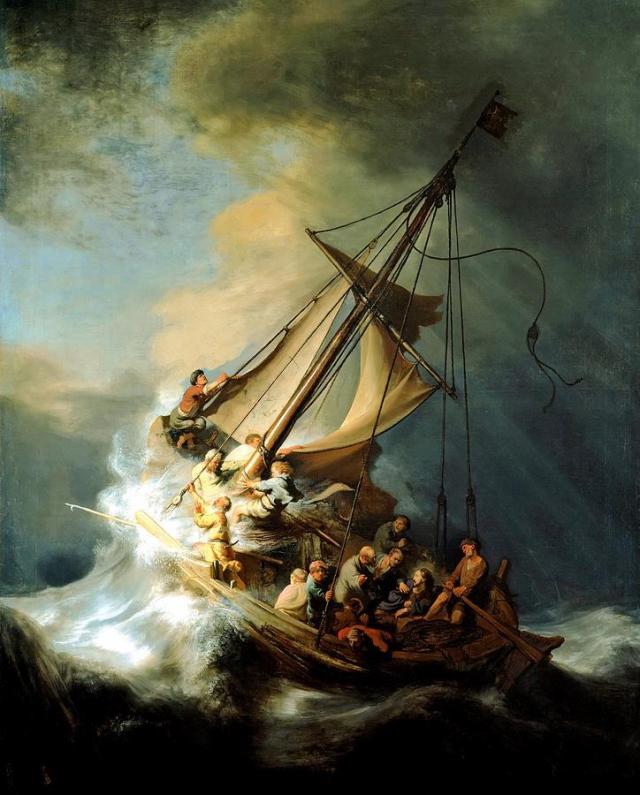
That surely is the very essence of Satan’s temptation of our Lord, and of every sanctified soul–‘Take your right to yourself and do God’s will according to your own sanctified understanding of it’. ‘Never!’ said Jesus, ‘For I am come down from heaven, not to do Mine own will, but the will of Him that sent Me’; and in the hour when dilemma perplexes him, the waves and the billows overwhelm him, and the noise of the water-spouts deafen him, the disciple learns the meaning of his Master’s ‘Follow Me.’”
“Give yourself to it [the call to prayer], yield to it; and you will find not only that you have not been wasting time with respect to the matter with which you are dealing but that actually it has helped you greatly in that respect. You will experience an ease and a facility in understanding what you were reading, in thinking, in ordering matter for a sermon, in writing, in everything which is quite astonishing. Such a call to prayer must never be regarded as a distraction; always respond to it immediately, and thank God if it happens to you frequently.”
Luke 16:15 And He said to them, “You are those who justify yourselves before men, but God knows your hearts. For what is highly esteemed among men is an abomination in the sight of God.
Joseph Charles Philpot (1802 — 1869) was known as “The Seceder”. He resigned from the Church of England in 1835 and became a Strict & Particular Baptist. While with the Church of England he was a Fellow of Worchester College, Oxford. After becoming a Strict and Particular Baptist he became the Editor of the Gospel Standard magazine and served in that capacity for twenty years.
Educated at Oxford University, he was elected a fellow of Worcester College, and appeared to have a brilliant scholastic career before him. But he was brought into solemn concern spiritually and the Lord led him into the ministry. He first preached in the Established Church at Stadhampton (Oxfordshire). In 1835, however, he was constrained, for the truth’s sake, to sever his connection with the Church of England and to resign his curacy and his fellowship. The letter to the provost stating his reasons was published and went into several editions.
The same year, he was baptized by John Warburton at Allington (Wilts). The rest of his life was spent ministering among the Strict Baptists. For 26 years, he held a joint pastorate at Stamford (Lines) and Oakham (Rutland). In addition for over twenty years, he was editor of “The Gospel Standard”, where many of his sermons first appeared.
“My desire is to exalt the grace of God; to proclaim salvation alone through Jesus Christ; to declare the sinfulness, helplessness and hopelessness of man in a state of nature; to describe the living experience of the children of God in their trials, temptations, sorrows, consolations and blessings.” – J. C. Philpot
6Mine eyes shall be upon the faithful of the land, that they may dwell with me: he that walketh in a perfect way, he shall serve me.
A PROMISE from God may very instructively be compared to a check payable to order. It is given to the believer with the view of bestowing upon him some good thing. It is not meant that he should read it over comfortably, and then have done with it. No, he is to treat the promise as a reality, as a man treats a check.
He is to take the promise, and endorse it with his own name by personally receiving it as true. He is by faith to accept it as his own. He sets to his seal that God is true, and true as to this particular word of promise. He goes further, and believes that he has the blessing in having the sure promise of it and therefore he puts his name to it to testify to the receipt of the blessing.
This done, he must believingly present the promise to the LORD, as a man presents a check at the counter of the Bank. He must plead it by prayer, expecting to have it fulfilled. If he has come to Heaven’s bank at the right date, he will receive the promised amount at once. If the date should happen to be further on, he must patiently wait till its arrival; but meanwhile he may count the promise as money, for the Bank is sure to pay when the due time arrives.
Some fail to place the endorsement of faith upon the check, and so they get nothing; and others are slack in presenting it, and these also receive nothing. This is not the fault of the promise, but of those who do not act with it in a common-sense, business-like manner.
God has given no pledge which He will not redeem, and encouraged no hope which He will not fulfill. To help my brethren to believe this, I have prepared this little volume. The sight of the promises themselves is good for the eyes of faith: the more we study the words of grace, the more grace shall we derive from the words. To the cheering Scriptures I have added testimonies of my own, the fruit of trial and experience. I believe all the promises of God, but many of them I have personally tried and proved. I have seen that they are true, for they have been fulfilled to me. This, I trust, may be cheering to the young; and not without solace to the older sort. One man’s experience may be of the utmost use to another; and this is why the man of God of old wrote, “I sought the LORD, and he heard me”; and again, “This poor man cried, and the LORD heard him.”
I commenced these daily portions when I was wading in the surf of controversy. Since then I have been cast into “waters to swim in,” which, but for God’s upholding hand, would have proved waters to drown in. I have endured tribulation from many hails. Sharp bodily pain succeeded mental depression, and this was accompanied both by bereavement and affliction in the person of one dear as life. The waters rolled in continually, wave upon wave. I do not mention this to exact sympathy, but simply to let the reader see that I am no dry-land sailor. I have traversed full many a time those oceans which are not Pacific: I know the roll of the billows, and the rush of the winds. Never were the promises of Jehovah so precious to me as at this hour. Some of them I never understood till now; I had not reached the date at which they matured, for I was not myself mature enough to perceive their meaning.
How much more wonderful is the Bible to me now than it was a few months ago! In obeying the LORD, and bearing His reproach outside the camp, I have not received new promises; but the result to me is much the same as if I had done so, for the old ones have opened up to me with richer stores. Specially has the Word of the LORD to His servant Jeremiah sounded exceedingly sweet in mine ears. His lot it was to speak to those who would not hear, or hearing, would nor believe. His was the sorrow which comes of disappointed love, and resolute loyalty; he would have turned his people from their errors, but he would not himself quit the way of the LORD. For him there were words of deep sustaining power, which kept his mind from failing where nature unaided must have sunk. These and such like golden sentences of grace I have loved more than my necessary food, and with them I have enriched these pages.
“Without absolutes revealed from without by God Himself, we are left rudderless in a sea of conflicting ideas about manners, justice and right and wrong, issuing from a multitude of self-opinionated God.”
Mark 12:31 The second is this: ‘Love your neighbor as yourself.’ There is no commandment greater than these.”
James Russell Miller was born on March 20, 1840 at Frankfort Springs, Pennsylvania and died on July 2, 1912. Besides authoring over 80 books, booklets, and pamphlets, he was the Editorial Superintendent of the Presbyterian Board of Publication and a very active pastor in a succession of churches.
The crucible of his education was his service with the United States Christian Commission, an agency set up to minister to the troops, during the civil war. When the war ended he completed his theological studies and was ordained and installed on September 11, 1867. On June 22, 1870, when he was thirty, he married Miss Louise E. King.
The end of life on earth came without warning on the afternoon of July 2, 1912. JR’s wife, Louise Miller, and their only daughter, Mary Wanamaker Miller (Mrs. W.B. Mount), were present, but it was impossible to summon the sons — William King Miller and Russell King Miller. One moment he seemed to be resting quietly; the next he was at rest.
He was one of the best selling Christian authors of his era. His books had a total circulation of over two million copies during his lifetime and in 1911 the Presbyterian Board of Publication, under his direction, published over 66 million copies of its periodicals.
Jeremiah 17:9 The heart is deceitful above all things, and desperately wicked: who can know it?
Hebrews 3:13 But exhort one another daily, while it is called To day; lest any of you be hardened through the deceitfulness of sin.
Edwards was born in East Windsor, Connecticut, to Timothy Edwards, pastor of East Windsor, and Esther Edwards. The only son in a family of eleven children, he entered Yale in September, 1716 when he was not yet thirteen and graduated four years later (1720) as valedictorian. He received his Masters three years later.
As a youth, Edwards was unable to accept the Calvinist sovereignty of God. He once wrote, “From my childhood up my mind had been full of objections against the doctrine of God’s sovereignty It used to appear like a horrible doctrine to me.” However, in 1721 he came to the conviction, one he called a “delightful conviction.” He was meditating on 1 Timothy 1:17, and later remarked, “As I read the words, there came into my soul, and was as it were diffused through it, a sense of the glory of the Divine Being; a new sense, quite different from any thing I ever experienced before I thought with myself, how excellent a Being that was, and how happy I should be, if I might enjoy that God, and be rapt up to him in heaven; and be as it were swallowed up in him for ever!” From that point on, Edwards delighted in the sovereignty of God. Edwards later recognized this as his conversion to Christ.
In 1727 he was ordained minister at Northampton and assistant to his maternal grandfather, Solomon Stoddard. He was a student minister, not a visiting pastor, his rule being thirteen hours of study a day. In the same year, he married Sarah Pierpont, then age seventeen, daughter of James Pierpont (1659-1714), a founder of Yale, originally called the Collegiate School. In total, Jonathan and Sarah had eleven children.
Solomon Stoddard died on February 11th, 1729, leaving to his grandson the difficult task of the sole ministerial charge of one of the largest and wealthiest congregations in the colony. Throughout his time in Northampton his preaching brought remarkable religious revivals. Jonathan Edwards was a key figure in what has come to be called the First Great Awakening of the 1730s and 1740s.
Yet, tensions flamed as Edwards would not continue his grandfather’s practice of open communion. Stoddard, his grandfather, believed that communion was a “converting ordinance.” Surrounding congregations had been convinced of this, and as Edwards became more convinced that this was harmful, his public disagreement with the idea caused his dismissal in 1750.
Edwards then moved to Stockbridge, Massachusetts, then a frontier settlement, where he ministered to a small congregation and served as missionary to the Housatonic Indians. There, having more time for study and writing, he completed his celebrated work, The Freedom of the Will (1754).
Edwards was elected president of the College of New Jersey (later Princeton University) in early 1758. He was a popular choice, for he had been a friend of the College since its inception and was the most eminent American philosopher-theologian of his time. On March 22, 1758, he died of fever at the age of fifty-four following experimental inoculation for smallpox and was buried in the President’s Lot in the Princeton cemetery beside his son-in-law, Aaron Burr.
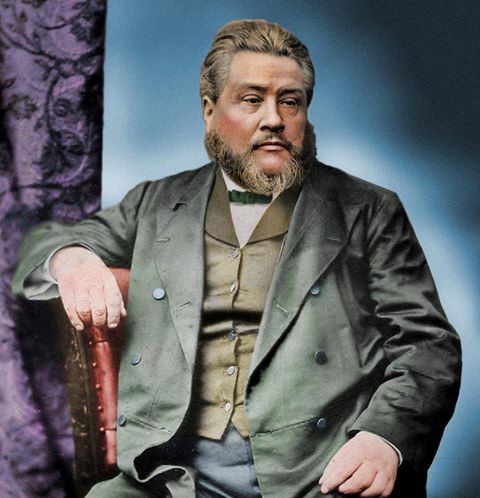
Spurgeon outlines the plan of salvation in such clear language that everyone can understand and be drawn to the Father. Attempts to please God based on our own works brings self-righteousness and coldness of heart. It is the free grace and mercy of God that makes the heart thankful for His love. Spurgeon’s final cry to the reader, “Meet me in heaven!!” “Whosoever will, let him take the water of life freely.” — Revelation 22:17
“The Lord knows very well that you cannot change your own heart and cannot cleanse your own nature. However , He also knows that he can do both. Hear this and be astonished. He can create you a second time. He can cause you to be born again.”