Proverbs 18:24 One who has unreliable friends soon comes to ruin,
but there is a friend who sticks closer than a brother.
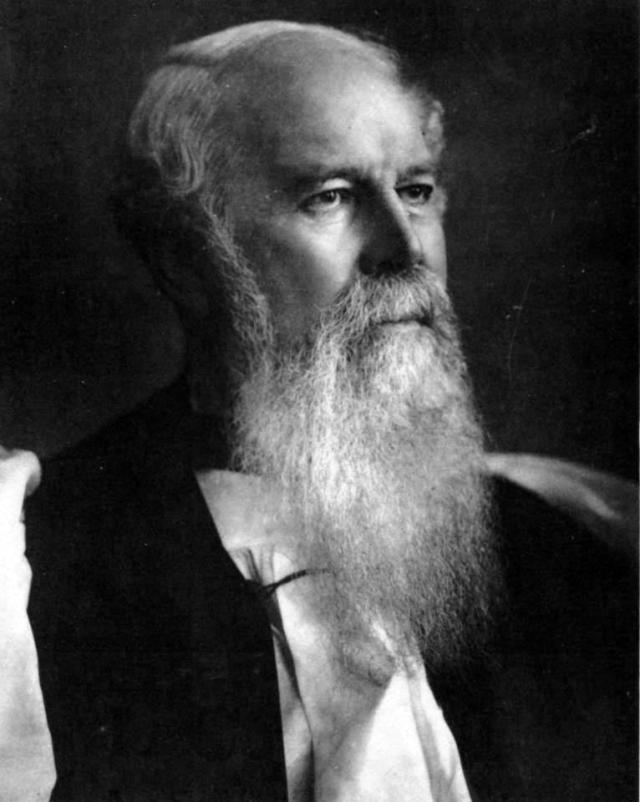
J.C. Ryle – (1816-1900), first Anglican bishop of Liverpool
John Charles Ryle was born at Macclesfield and was educated at Eton and at Christ Church, Oxford. He was a fine athlete who rowed and played Cricket for Oxford, where he took a first class degree in Greats and was offered a college fellowship (teaching position) which he declined. The son of a wealthy banker, he was destined for a career in politics before answering a call to ordained ministry.
He was spiritually awakened in 1838 while hearing Ephesians 2 read in church. He was ordained by Bishop Sumner at Winchester in 1842. After holding a curacy at Exbury in Hampshire, he became rector of St Thomas’s, Winchester (1843), rector of Helmingham, Suffolk (1844), vicar of Stradbroke (1861), honorary canon of Norwich (1872), and dean of Salisbury (1880). In 1880, at age 64, he became the first bishop of Liverpool, at the recommendation of Prime Minister Benjamin Disraeli. He retired in 1900 at age 83 and died later the same year.
Ryle was a strong supporter of the evangelical school and a critic of Ritualism. Among his longer works are Christian Leaders of the Eighteenth Century (1869), Expository Thoughts on the Gospels (7 vols, 1856-69) and Principles for Churchmen (1884).
Charles Ebert Orr: (1861-). Man of mystery. There is very little about him on the Web.
His books includes:
Christian Conduct
The More Abundant Life
A Neighborhood Awakening
Food for Lambs
Helps to Holy Living
The Hidden Life
How to Live a Holy Life
The Instruction of Youth in the Christian Life
Odors from Golden Vials
A Religious Controversy
Psalm 119:105 Your word is a lamp for my feet,
a light on my path.
2 Timothy 3:16 All Scripture is God-breathed and is useful for teaching, rebuking, correcting and training in righteousness, 17 so that the servant of God may be thoroughly equipped for every good work.
Arthur Walkington Pink (1886-1952) evangelist and Biblical scholar
Pink was born in Nottingham, England on April 1, 1886 and became a Christian in his early 20’s. Though born to Christian parents, prior to conversion he migrated into a Theosophical society (an occult gnostic group popular in England during that time), and quickly rose in prominence within their ranks. His conversion came from his father’s patient admonitions from Scripture. It was the verse, Proverbs 14:12, ‘there is a way which seems right to a man, but its end is the way of death,’ which particularly struck his heart and compelled him to renounce Theosophy and follow Jesus.
Desiring to grow in knowledge of the Bible, Pink immigrated to the United States to study at Moody Bible Institute. In 1916 he married Vera E. Russell, who was from Kentucky. However, he left after just two months for Colorado, then California, then Britain. From 1925 to 1928 he served in Australia, including as pastor of two congregations from 1926 to 1928, when he returned to England, and to the United States the following year. He eventually pastored churches Colorado, California, Kentucky and South Carolina.
In 1922 he started a monthly magazine entitled Studies in Scriptures which circulated among English-speaking Christians worldwide, though only to a relatively small circulation list of around 1,000.
In 1934 Pink returned to England, and within a few years turned his Christian service to writing books and pamphlets. Pink died in Stornoway, Scotland on July 15, 1952. The cause of death was anemia.
After Pink’s death, his works were republished by the Banner of Truth Trust and reached a much wider audience as a result. Biographer Iain Murray observes of Pink, “the widespread circulation of his writings after his death made him one of the most influential evangelical authors in the second half of the twentieth century.” His writing sparked a revival of expository preaching and focused readers’ hearts on biblical living.
“In the infinite wisdom of the Lord of all the earth, each event falls with exact precision into its proper place in the unfolding of His divine plan. Nothing, however small, however strange, occurs without His ordering, or without its particular fitness for its place in the working out of His purpose; and the end of all shall be the manifestation of His glory, and the accumulation of His praise.”
“The purest gold is that which has been longest in the refiner’s furnace. The brightest diamond is often that which has required the most grinding and polishing. But our light affliction endureth but for a moment , and it worketh for us a far more exceeding and eternal weight of glory.”
1 Timothy 6:9 Those who want to get rich fall into temptation and a trap and into many foolish and harmful desires that plunge people into ruin and destruction. 10 For the love of money is a root of all kinds of evil. Some people, eager for money, have wandered from the faith and pierced themselves with many griefs.
Matthew 6:24 “No one can serve two masters. Either you will hate the one and love the other, or you will be devoted to the one and despise the other. You cannot serve both God and money.
John Newton – (1725-1807), Evangelical divine and hymn writer
Newton was born in London July 24, 1725, the son of a commander of a merchant ship which sailed the Mediterranean. When John was eleven, he went to sea with his father and made six voyages with him before the elder Newton retired. In 1744 John was impressed into service on a man-of-war, the H. M. S. Harwich. Finding conditions on board intolerable, he deserted but was soon recaptured and publicly flogged and demoted from midshipman to common seaman.
Although he had had some early religious instruction from his mother, who had died when he was a child, he had long since given up any religious convictions. However, on a homeward voyage, while he was attempting to steer the ship through a violent storm, he experienced what he was to refer to later as his “great deliverance.” He recorded in his journal that when all seemed lost and the ship would surely sink, he exclaimed, “Lord, have mercy upon us.” Later in his cabin he reflected on what he had said and began to believe that God had addressed him through the storm and that grace had begun to work for him.
For the rest of his life he observed the anniversary of May 10, 1748 as the day of his conversion, a day of humiliation in which he subjected his will to a higher power. “Thro’ many dangers, toils and snares, I have already come; ’tis grace has bro’t me safe thus far, and grace will lead me home.” He continued in the slave trade for a time after his conversion; however, he saw to it that the slaves under his care were treated humanely.
In 1750 he married Mary Catlett, with whom he had been in love for many years. By 1755, after a serious illness, he had given up seafaring forever. During his days as a sailor he had begun to educate himself, teaching himself Latin, among other subjects. From 1755 to 1760 Newton was surveyor of tides at Liverpool, where he came to know George Whitefield, deacon in the Church of England, evangelistic preacher, and leader of the Calvinistic Methodist Church. Newton became Whitefield’s enthusiastic disciple. During this period Newton also met and came to admire John Wesley, founder of Methodism. Newton’s self-education continued, and he learned Greek and Hebrew.
He decided to become a minister and applied to the Archbishop of York for ordination. The Archbishop refused his request, but Newton persisted in his goal, and he was subsequently ordained by the Bishop of Lincoln and accepted the curacy of Olney, Buckinghamshire. Newton’s church became so crowded during services that it had to be enlarged. He preached not only in Olney but in other parts of the country. In 1767 the poet William Cowper settled at Olney, and he and Newton became friends.
Cowper helped Newton with his religious services and on his tours to other places. They held not only a regular weekly church service but also began a series of weekly prayer meetings, for which their goal was to write a new hymn for each one. They collaborated on several editions of Olney Hymns, which achieved lasting popularity. The first edition, published in 1779, contained 68 pieces by Cowper and 280 by Newton.
Among Newton’s contributions which are still loved and sung today are “How Sweet the Name of Jesus Sounds” and “Glorious Things of Thee Are Spoken,” as well as “Amazing Grace.” Composed probably between 1760 and 1770 in Olney, “Amazing Grace” was possibly one of the hymns written for a weekly service. The origin of the melody is unknown. Most hymnals attribute it to an early American folk melody. The Bill Moyers special on “Amazing Grace” speculated that it may have originated as the tune of a song the slaves sang.
In 1780 Newton left Olney to become rector of St. Mary Woolnoth, St. Mary Woolchurch, in London. There he drew large congregations and influenced many, among them William Wilberforce, who would one day become a leader in the campaign for the abolition of slavery. Newton continued to preach until the last year of life, although he was blind by that time. He died in London December 21, 1807. Infidel and libertine turned minister in the Church of England, he was secure in his faith that amazing grace would lead him home.
“You will have no test of faith that will not fit you to be a blessing if you are obedient to the Lord. I never had a trial but when I got out of the deep river I found some poor pilgrim on the bank that I was able to help by that very experience.”
18 but grow in the grace and knowledge of our Lord and Savior Jesus Christ.
SPRAGUE, WILLIAM BITELI„ n.n., 1795-1876; b. Conn.; graduated at Yale college. 1815; private tutor in Virginia, 1815-16; studied Princeton college and was settled over the First church (Congregational), West Sitringfield, Mass., as colleague pastor. 1819, and as pastor, 1821; pastor of Second Presbyterian church, Albany, 1829-69; resided at Flushing, L. I.. from 1869 until his death. Published numerous sermons and addresses; Letters to a Daughter; Lectures to Young People; ‘:Letters from Europe; Life of Edward Dor?’ Griffen; Life of Timothy Aright; Lectures on Ikrirals; Hints on the _Intercourse if Christiaras; Women of the Bible; Visits to European’Welebrities; Annals of the American Pulpit, 9 vols., a work of great research, and contributed to the biographical department of Appleton’s Cyclopedia.
“God chastens us for our good—that we may
share in His holiness.” Hebrews 12:10
“put to death whatever in you
is worldly: sexual immorality, impurity, lust, evil
desire, and greed.” (Col. 3:5)
“My son, do not take the Lord’s chastening lightly,
or faint when you are reproved by Him.” (Heb. 12:5)
“No discipline seems pleasant at the time, but
painful. Later on, however, it produces a harvest of
righteousness and peace for those who have been
trained by it.” (Hebrews 12:11)
A.W. Pink (1886-1952): Pastor, itinerate Bible teacher, author of Studies in the Scriptures and many books including his well-known The Sovereignty of God; born in Great Britain, immigrated to the U.S., and later returned to his homeland in 1934; born in Nottingham, England.