Western culture as a whole, and the United States in particular, has had a tremendous amount of light from God, and experienced many blessings from His hand. Yet, this culture seems intent upon continuing on its path to self-destruction. A few thoughts from the Christian worldview (while we are still allowed, we would hope, to express them).
Christian Praise and Worship in Songs, Sermons, and Audio Books (my YouTube channel)
A large video collection (over 3,200 videos as of Dec 28, 2012) of classic hymns, Praise and Worship songs, and the works (audio books, devotional readings, and sermons) of men greatly used of God, such as: Charles Spurgeon, Jonathan Edwards, A.W. Tozer, A.W. Pink, John Owen, Oswald Chambers, Andrew Murray, John MacArthur, E.M. Bounds, John Bunyan, George Whitefield, and many more, covering topics on many aspects of the Christian life. May your time spent here be blessed. http://www.youtube.com/user/stack45ny
My new original song. If you have a YouTube account, and find the song a blessing, please consider clicking “Like,” for doing so will help my video rank higher in search engines and therefore reach more people. Saving the video to your favorites and playlists is also helpful…thank you. http://youtu.be/5G7QRG4gy58
Ichabod Spencer – The Neglected Bible: How it Spoke
Ichabod Smith Spencer was born in 1798 in Rupert, VT. He was unconverted until just after his 18th birthday. The previous year his father died and this left him utterly devastated. “It is highly probable that his father’s death so deeply felt, and so great a trial, was sanctified to his soul, and overruled to lead his mind and heart, so dark and trembling, to the only true ‘Rock of hope and support.’ It was more than a year, however, after this event occurred, before the grace of God changed his heart, and turned his feet into the way of life.”
He was converted in Granville, NY and was educated at schools in the upstate NY region. He became a school teacher, and his fame grew to the place that he was in great demand. In fact, in 1830 he was called to be President of the University of Alabama, and in 1832 the President of Hamilton College of NY. He refused these both as the Lord had by this time called him to preach. He was called to serve as colleague-pastor of the Congregational Church in Northampton, MA in 1828, the church made famous by Jonathan Edwards.
Spencer’s ministry at Northampton from 1828-1832 was remarkably blessed with conversions. More than 250 in those few years came to Christ, and he wore himself out in the work. For health reasons alone he left that demanding and large ministry in 1832. The people of the city and congregation wept and mourned the loss of this precious servant of God, and they never forgot him, nor he them. They always delighted to receive reports of the work of the Lord in Brooklyn, and he rejoiced to hear how the hand of God was extended to the brethren in his first parish.
He refused a call to Park Street Church, Boston, the largest in New England at this time because of his tender health. Later in 1832 he accepted the call to the Second Presbyterian Church of Brooklyn, NY. This was a church planting effort with no building and about 40 people. He remained at this post the rest of his life, thus spending 22 years at this church. By the time of his death the church had grown to be one of the largest and most influential in all of NY State. His biographer states that he was one of the greatest preachers the American Pulpit produced during that era. At the same time, his greatest gift and legacy was in the pastoral ministry. He was a true shepherd.
Spencer placed upon himself the demand that he would have a home visit for every member of his church every year, which he did for all 22 years. These visits were not for social but spiritual purposes, and were rarely spent in vain. It is said that he averaged over 800 appointments with souls every year for the 25 years of pastoral labor. Perhaps the most remarkable thing is that he recorded each of these in careful fashion and had a dozen huge volumes containing detailed information on each of these visits. His Pastor’s Sketches contain material drawn from these volumes. The two volumes of Sketches contain but 77 specimens taken from over 20,000 available to him. It is no wonder that he came to be referred to as The Bunyan of Brooklyn.
He was a man fully committed to the doctrines of grace, and he constantly preached upon the themes of total depravity, sovereign grace, free justification by faith in Christ alone, the certainty of the judgement to come, the greatness of the mercy and love of God. He preached these themes both publicly and from house to house. As great and gifted a preacher as he was, and as effective as his sermons were to awaken sinners, it was his personal ministry that was most mightily blessed by God as he dealt with anxious inquirers.
One of the results of the publication of these volumes was the spread of his fame as a healer of souls. Soon he was receiving letters from all over the country from sin sick souls seeking relief. He answered every one with care. Along with preaching four to five carefully prepared sermons each week, and ministering to his growing congregation, he now had to stretch himself even further. Sadly, within a year his health broke down and he never recovered. He suffered greatly his last months. One of his dearest friends, Gardiner Spring, was with him as he drew near to the grave, and the Lord gave Spencer wonderful peace to the end. He fell asleep in his Lord on Nov. 23, 1854.
Luke 12:29 And seek not ye what ye shall eat, or what ye shall drink, neither be ye of doubtful mind.
Psalm 103:1 Bless the Lord, O my soul: and all that is within me, bless his holy name.
Charles Haddon (C.H.) Spurgeon (June 19, 1834 January 31, 1892) was a British Reformed Baptist preacher who remains highly influential among Christians of different denominations, among whom he is still known as the “Prince of Preachers.” In his lifetime, Spurgeon preached to around 10,000,000 people, often up to 10 times a week at different places. His sermons have been translated into many languages. Spurgeon was the pastor of the New Park Street Chapel in London for 38 years. In 1857, he started a charity organization called Spurgeon’s which now works globally. He also founded Spurgeon’s College, which was named after him after his death.
Spurgeon was a prolific author of many types of works including sermons, an autobiography, a commentary, books on prayer, a devotional, a magazine, and more. Many sermons were transcribed as he spoke and were translated into many languages during his lifetime. Arguably, no other author, Christian or otherwise, has more material in print than C.H. Spurgeon.
John Bunyan – The Heavenly Footman / A Description of the Man That Gets to Heaven, How to Run
1 Corinthians 9:24
King James Version (KJV)
24 Know ye not that they which run in a race run all, but one receiveth the prize? So run, that ye may obtain.
Hebrews 12:1 Wherefore seeing we also are compassed about with so great a cloud of witnesses, let us lay aside every weight, and the sin which doth so easily beset us, and let us run with patience the race that is set before us,
John Bunyan (1628-1688), Puritan author, had very little schooling. He followed his father in the tinker’s trade, and he served in the parliamentary army from1644 to 1647. Bunyan married in 1649 and lived in Elstow until 1655, when his wife died. He then moved to Bedford, and married again in 1659. John Bunyan was received into the Baptist church in Bedford by immersion in 1653.
In 1655, he became a deacon and began preaching, with marked success from the start. In 1658 he was indicted for preaching without a license. The authorities were fairly tolerant of him for a while, and he did not suffer imprisonment until November of 1660, when he was taken to the county jail in Silver Street, Bedford, and there confined (with the exception of a few weeks in 1666) for 12 years until January 1672. He afterward became pastor of the Bedford church. In March of 1675 he was again imprisoned for preaching publicly without a license, this time being held in the Bedford town jail. In just six months this time he was freed, (no doubt the authorities were growing weary of providing Bunyan with free shelter and food) and he was not bothered again by the authorities.
He wrote The Pilgrim’s Progress in two parts, of which the first appeared at London in 1678,which he had begun during his imprisonment in 1676. The second part appeared in 1684. The earliest edition in which the two parts were combined in one volume came out in 1728. A third part falsely attributed to Bunyan appeared in 1693. The Pilgrim’s Progress is the most successful allegory ever written, and like the Bible has been extensively translated into other languages.
He wrote many other books, including one which discussed his inner life and reveals his preparation for his appointed work is Grace Abounding to the Chief of Sinners (1666). He became a popular preacher as well as a very voluminous author, though most of his works consist of expanded sermons. In theology he was a Puritan, but not a partisan. He was no scholar, except of the English Bible, but that he knew thoroughly. He also drew much influence from Martin Luther’s Commentary on the Epistle to the Galatians.
Some time before his final release from prison he became involved in a controversy with two theologians of his day: Kiffin and Paul. In 1673 he published his Differences in Judgement about Water-Baptism no Bar to Communion, in which he took the ground that “the Church of Christ hath not warrant to keep out of the communion the Christian that is discovered to be a visible saint of the word, the Christian that walketh according to his own light with God.” While he agreed as a Baptist that water baptism was God’s ordinance, he refused to make “an idol of it,” and he disagreed with those who would dis-fellowship from Christians who did not adhere to water baptism
Kiffin and Paul published a rejoinder in Serious Reflections (London, 1673), in which they set forth the argument in favor of the restriction of the Lord’s Supper to baptized believers. The controversy resulted in the Particular (Calvinistic) Baptists leaving the question of communion with the unbaptized open. Bunyan’s church permitted pedobaptists (those who baptize children, such as the Calvinistic Presbyterian Church) to fellowship and eventually, Bunyans church even became a pedobaptist church.
On a trip to London, he caught a severe cold, and he died at the house of a friend at Snow Hill on August 31, 1688. His grave lies in the cemetery at Bunhill Fields in London.
Let me listen, daily, hourly, to the divine admonition–“Walk in the Spirit and you shall not fulfill the lusts of the flesh.” How many venture to walk–but it is to walk dangerously near the precipice straying on doubtful or forbidden ground; with a faltering will; holding parley with sin; tampering with the sensitiveness of conscience and with the treacherous allurements and base compliances of the world; thus “grieving the Holy Spirit of God, whereby we are sealed unto the day of redemption.”
Lord, bring me to live more and more constantly under the sovereignty of that lofty motive to walk and act so as to please You; to exercise a jealous scrutiny over my truant, treacherous, deceitful heart. Specially in my daily business and daily duties and daily temptations and daily perplexities, may I seek to be led by Your Spirit. Let me keep free of whatever influences would deflect the needle from its pole, and prevent the love of God from being shed abroad in my heart by the Holy Spirit given unto me. Beholding, as in a glass, the glory of the Lord, may I be changed into the same image from glory to glory, by the Lord the Spirit (2 Cor. 3;18). Free from the bondage of the law–the law of sin and death, let me become a willing slave to the new bondage of Christ’s service. Recognizing the ultimate end of Redemption to be Sanctification, may I yield myself and my members servants to righteousness unto holiness (Rom. 6;19).
– John MacDuff
From PAUL’S SONG OF SONGS
A devotional exposition of Romans 8
“And then shall many be offended, and shall betray one another, and shall hate one another.” (Mat 24:10)
The malignity of others. When persecution is in fashion, envy, enmity, and malice, are strangely diffused into the minds of men by contagion: and charity, tenderness, and moderation, are looked upon as singularities, which make a man like a speckled bird. Then they shall betray one another, that is,”Those that have treacherously deserted their religion, shall hate and betray those who adhere to it, for whom they have pretended friendship.’’ Apostates have commonly been the most bitter and violent persecutors. Note, Persecuting times are discovering times. Wolves in sheep’s clothing will then throw off their disguise, and appear wolves: they shall betray one another, and hate one another. The times must needs be perilous, when treachery and hatred, two of the worst things that can be, because directly contrary to two of the best (truth and love), shall have the ascendant.
John Ryle had his beginnings at Oxford, where he was an athlete and first class student of the Greats. He was headed for a career in politics, but then was called to the ministry. This work is a study of holiness, or Christian perfection. Ryle works to debunk many of the popular beliefs of his day concerning holiness. Reviewers praise his balance of honest, tough-love messages and compassionate, pastoral care. An intense but readable book, Holiness has been inspiration for living a Christian life for over a century. Believers looking for instructions on how to improve their lifestyle and continue the process of sanctification will value this book, which discusses grace, God’s love, and, of course, holiness.
(This volume is considered the best book on
the Christian life that has EVER been written.)
Chapters on:
Sin
Sanctification
Holiness
The Fight
The Cost
Growth
Assurance
Moses—An Example
Lot—A Beacon
A Woman to Be Remembered
Christ’s Greatest Trophy
The Ruler of the Waves
The Church Which Christ Builds
Visible Churches Warned
Do you love Me?
Without Christ
Thirst Relieved
Unsearchable Riches
Needs of the Times
Christ is All
“From his conversion [in 1837] to his burial [in 1900], J.C. Ryle was entirely one-dimensional. He was a one-book man; he was steeped in Scripture; he bled the Bible. As only Ryle could say, ‘It is still the first book which fits the child’s mind when he begins to learn religion, and the last to which the old man clings as he leaves the world.’
“This is WHY his works have lasted—and will last—they bear the stamp of eternity. Today, more than a hundred years after his passing, Ryle’s works stand at the crossroads between the historic faith and modern evangelicalism. Like signposts, they direct us to the ‘old paths.’ And, like signposts, they are meant to be read.”
“He [J.C. Ryle] was great through the abounding grace of God. He was great in stature; great in mental power; great in spirituality; great as a preacher and expositor of God’s most holy Word; great in hospitality; great as a writer of Gospel tracts; great as a Bishop of the Reformed Evangelical Protestant Church in England, of which he was a noble defender; great as first Bishop of Liverpool. I am bold to say, that perhaps few men in the nineteenth century did as much for God, for truth, and for righteousness, among the English speaking race, and in the world, as our late Bishop.”
~ Rev. Richard Hobson, three days after Ryle’s burial in 1900.


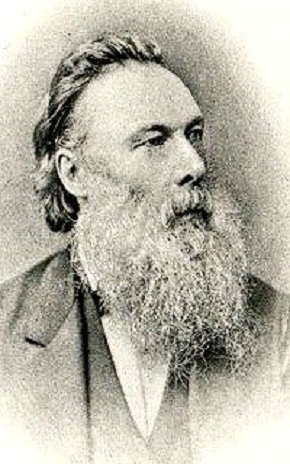


Matthew Henry – And then shall many be Offended, and shall Betray one Another, and shall Hate one Another
“And then shall many be offended, and shall betray one another, and shall hate one another.” (Mat 24:10)
The malignity of others. When persecution is in fashion, envy, enmity, and malice, are strangely diffused into the minds of men by contagion: and charity, tenderness, and moderation, are looked upon as singularities, which make a man like a speckled bird. Then they shall betray one another, that is,”Those that have treacherously deserted their religion, shall hate and betray those who adhere to it, for whom they have pretended friendship.’’ Apostates have commonly been the most bitter and violent persecutors. Note, Persecuting times are discovering times. Wolves in sheep’s clothing will then throw off their disguise, and appear wolves: they shall betray one another, and hate one another. The times must needs be perilous, when treachery and hatred, two of the worst things that can be, because directly contrary to two of the best (truth and love), shall have the ascendant.
– Matthew Henry
Share this: