Isaiah 45:22 Look unto me, and be ye saved, all the ends of the earth: for I am God, and there is none else.
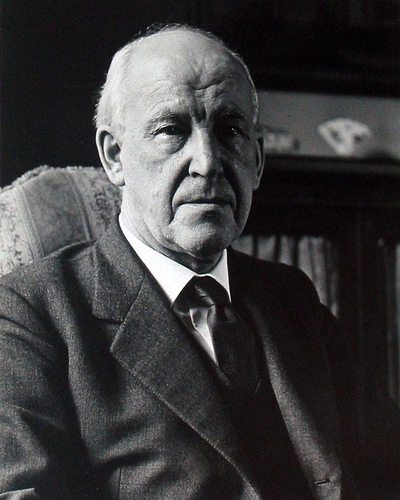
Charles Haddon (C.H.) Spurgeon (June 19, 1834 January 31, 1892) was a British Reformed Baptist preacher who remains highly influential among Christians of different denominations, among whom he is still known as the “Prince of Preachers.” In his lifetime, Spurgeon preached to around 10,000,000 people, often up to 10 times a week at different places. His sermons have been translated into many languages. Spurgeon was the pastor of the New Park Street Chapel in London for 38 years. In 1857, he started a charity organization called Spurgeon’s which now works globally. He also founded Spurgeon’s College, which was named after him after his death.
Spurgeon was a prolific author of many types of works including sermons, an autobiography, a commentary, books on prayer, a devotional, a magazine, and more. Many sermons were transcribed as he spoke and were translated into many languages during his lifetime. Arguably, no other author, Christian or otherwise, has more material in print than C.H. Spurgeon.
Music written, performed, recorded, owned and copyrighted by stack45ny.
Guitar used: Gibson Les Paul Standard
Psalm 104
31 May the glory of the Lord endure forever;
May the Lord rejoice in His works.
32 He looks on the earth, and it trembles;
He touches the hills, and they smoke.
33 I will sing to the Lord as long as I live;
I will sing praise to my God while I have my being.
34 May my meditation be sweet to Him;
I will be glad in the Lord.
35 May sinners be consumed from the earth,
And the wicked be no more.
Sing praises to the Lord and bless His name
Come with a thankful heart and worship Him
The Lord is righteous in all His ways
Gracious in all His works
The Lord is near to all who call on Him
To all who call on Him in truth
My mouth shall speak His praise
Forever and ever
Forever and ever
Forever and ever
Forever, I will
Sing praises to the Lord and bless His name
Come with a thankful heart and worship Him
He will fulfill the desire of those who fear His name
He will hear their cry and save them
The Lord preserves all who love Him
My mouth shall speak His praise
Forever and ever
Forever and ever
Forever and ever
Luke 18:9 Also He spoke this parable to some who trusted in themselves that they were righteous, and despised others: 10 “Two men went up to the temple to pray, one a Pharisee and the other a tax collector. 11 The Pharisee stood and prayed thus with himself, ‘God, I thank You that I am not like other men—extortioners, unjust, adulterers, or even as this tax collector. 12 I fast twice a week; I give tithes of all that I possess.’ 13 And the tax collector, standing afar off, would not so much as raise his eyes to heaven, but beat his breast, saying, ‘God, be merciful to me a sinner!’ 14 I tell you, this man went down to his house justified rather than the other; for everyone who exalts himself will be humbled, and he who humbles himself will be exalted.”
George Whitefield (Methodist evangelist, 1714-1770), was born on December 16, 1714, in Gloucester, England. The youngest of seven children, he was born in the Bell Inn where his father, Thomas, was a wine merchant and innkeeper. His father died when George was two and his widowed mother Elizabeth struggled to provide for her family. Because he thought he would never make much use of his education, at about age 15 George persuaded his mother to let him leave school and work in the inn. However, sitting up late at night, George became a diligent student of the Bible. A visit to his Mother by an Oxford student who worked his way through college encouraged George to pursue a university education. He returned to grammar school to finish his preparation to enter Oxford, losing only about one year of school.
In 1732 at age 17, George entered Pembroke College at Oxford. He was gradually drawn into a group called the “Holy Club” where he met John and Charles Wesley. Charles Wesley loaned him the book, The Life of God in the Soul of Man. The reading of this book, after a long and painful struggle which even affected him physically, finally resulted in George’s conversion in 1735. He said many years later: “I know the place…. Whenever I go to Oxford, I cannot help running to the spot where Jesus Christ first revealed himself to me and gave me the new birth.”
Forced to leave school because of poor health, George returned home for nine months of recuperation. Far from idle, his activity attracted the attention of the bishop of Gloucester, who ordained Whitefield as a deacon, and later as a priest, in the Church of England. Whitefield finished his degree at Oxford and on June 20, 1736, Bishop Benson ordained him. The Bishop, placing his hands upon George’s head, resulted in George’s later declaration that “My heart was melted down and I offered my whole spirit, soul, and body to the service of God’s sanctuary.”
Whitefield was an astounding preacher from the beginning. Though he was slender in build, he stormed in the pulpit as if he were a giant. Within a year it was said that “his voice startled England like a trumpet blast.” At a time when London had a population of less than 700,000, he could hold spellbound 20,000 people at a time at Moorfields and Kennington Common. For thirty-four years his preaching resounded throughout England and America. In his preaching ministry he crossed the Atlantic thirteen times and became known as the ‘apostle of the British empire.’
He was a firm Calvinist in his theology yet unrivaled as an aggressive evangelist. Though a clergyman of the Church of England, he cooperated with and had a profound impact on people and churches of many traditions, including Presbyterians, Congregationalists, and Baptists. Whitefield, along with the Wesleys, inspired the movement that became known as the Methodists. Whitefield preached more than 18,000 sermons in his lifetime, an average of 500 a year or ten a week. Many of them were given over and over again. Fewer than 90 have survived in any form.
Charles Haddon (C.H.) Spurgeon (June 19, 1834 January 31, 1892) was a British Reformed Baptist preacher who remains highly influential among Christians of different denominations, among whom he is still known as the “Prince of Preachers.” In his lifetime, Spurgeon preached to around 10,000,000 people, often up to 10 times a week at different places. His sermons have been translated into many languages. Spurgeon was the pastor of the New Park Street Chapel in London for 38 years. In 1857, he started a charity organization called Spurgeon’s which now works globally. He also founded Spurgeon’s College, which was named after him after his death.
The descendant of several generations of Independent ministers, he was born at Kelvedon, Essex, and became a Baptist in 1850. In the same year he preached his first sermon, and in 1852 he was appointed paster of the Baptist congregation at Waterbeach. In 1854 he went to Southwark, where his sermons drew such crowds that a new church, the Metropolitan Tabernacle in Newington Causeway, had to be built for him. Apart from his preaching activites he founded a pastors’ college, an orphanage, and a colportage association for the propagation of uplifting literature. Spurgeon was a strong Calvinist. He had a controversy in 1864 with the Evangelical party of the Church of England for remaining in a Church that taught Baptismal Regeneration, and also estranged considerable sections of his own community by rigid opposition to the more liberal methods of Biblical exegesis. These differences led to a rupture with the Baptist Union in 1887. He owed his fame as a preacher to his great oratorical gifts, humour, and shrewd common sense, which showed itself especially in his treatment of contemporary problems. Among his works are The Saint and his Saviour (1857), Commenting and Commentaries (1876) and numerous volumes of sermons (translated into many languages).
—The Oxford Dictionary of the Christian Church
War! War! War! – Spurgeon Sermons
1 Samuel 18:17And Saul said to David, Behold my elder daughter Merab, her will I give thee to wife: only be thou valiant for me, and fight the LORD’s battles. For Saul said, Let not mine hand be upon him, but let the hand of the Philistines be upon him.
“Our justification means not only that our sins are forgiven and that we have been declared to be righteous by God Himself, not merely that we were righteous at the moment when we believed, but permanently righteous. For justification means this also, that we are given by God the positive righteousness of His own Son, the Lord Jesus Christ.”
Some known wolves in the Church: Harold Camping, Joel Osteen, Rick Warren, Rob Bell, Joyce Meyer, Juanita Bynum, Benny Hinn, T.D. Jakes, Robert Schuller, Kenneth Copeland, Gloria Copeland, John Hagee, Jessie Duplantis, Kenneth Hagin, Frederick Price, Tony Alamo, Todd Bentley, Paula White, Joseph Prince, Creflo Dollar.
The Sheep’s Clothing will Soon be Stripped from the Wolf’s Back – William Secker
Secker, William (d. 1681?), Church of England clergyman and religious writer.
William Secker preached at Tewkesbury and afterwards at All-Hallows, London Wall. He may have been the William Secker who was appointed rector of Leigh, Essex, on 30 Aug. 1667, and died there before November 1681.
Secker’s sermon on ‘A Wedding Ring fit for the Finger, or the Salve of Divinity on the Sore of Humanity, laid open at a Wedding in St. Edmunds, London, 1658, 12mo, was very popular, and was often reprinted. It was translated into Welsh. Secker also dedicated to Sir Edward and Lady Frances Barkham of Tottenham, who had befriended him, a volume of sermons entitled ‘The Nonsuch Professor’ (London, 1660, 8vo). It was several times reprinted in America.
Julie Bernstein’s story of music began in Illinois at a very early age. Her family’s house in the country sat on the corner of a crossroads, with the little country church she attended through childhood at one end. The crossroads between church and the opposite path would be a theme she’d revisit in her life many times.
As a child, she spent long afternoons laying in the fields watching the clouds and the sky, listening to nature’s orchestra of wind as it rustled through the trees. This love of sound led her to a musical kindergarten at age 6, and she studied with her first piano teacher all the way through high school.
It was clear that music was Julie’s path, as she learned so quickly she played through entire books instead of just the assignments for her piano lessons. This led to playing clarinet, oboe, flute, saxophone, trumpet, French horn, violin, bass clarinet… anything she could get her hands on. She would give “bedroom concerts” where all her instruments were laid out on her bed, and she would grab each one at the appropriate time while performing along with Mozart’s Requiem, all by ear. Just like the wind she loved to listen to, the music lifted her spirit and brought tears to her eyes because of the wonderful sounds she could create.
All this intense musical focus gave Julie a particular talent in sight reading, and her talents were recognized by teachers in 5th grade when she was called to substitute on piano at a choir rehearsal. This led to singing in choir, playing piano on every project thrown at her, and living in music 24 hours a day.
Julie auditioned and won a scholarship to college, where she studied music and was living her dream of a musical life. She found the perfect relationship, earned perfect grades, and was truly enjoying the creative atmosphere she had built around herself. But this “perfect life” everyone saw on the outside was quickly turning into something quite different.
Julie’s relationship had turned abusive, to the point that she tried to break it off but was forced to stay. She endured cycle after cycle of abuse followed by reassurance that it would never happen again. When she finally gathered up the strength to end the relationship for good, she ended up in the ER.
The emergency room was the beginning of Julie’s shutdown. After a prolonged absence, she returned to school and was determined to lose herself in music again. But depression set in, and she found herself slowly sinking instead of returning to the “perfect life” she had set out for herself. Desperate for help, she talked with her music professor, who took her for prayer with a pastor she had never met. This is where her heart and mind were opened to the reality of Jesus, and her heart became gripped with the desire to know Him. Something changed drastically on the inside of Julie during that meeting. Days later she attended a small church gathering with her professor and his wife. Her mind fought worship, but through their prayers in the moment, Julie finally let go. The Holy Spirit flooded her soul, and she was absolutely consumed… it was eternity breaking in, and she would never be the same.
The Treasury of David is the most exhaustive commentary on the book of Psalms available, written by C. H. Spurgeon and commonly regarded as his magnum opus.
Treasury of David
Bible commentary on every verse in every chapter of Psalms.
Spurgeon’s expository comments help the reader in his understanding of Scripture.
Frequent “Explanatory notes and quaint sayings” offer helpful insights from many different Bible teachers throughout history on each Psalm.
“Hints to the village preacher” aid in preparing Bible studies and sermons.
The Treasury of David took Spurgeon 15 years to complete. It was originally published in installments, until finally made available in a seven volume set.
The complete unabridged work is part of the SwordSearcher Deluxe Bible Study Library, with commentary on any verse of the Psalms just a click away. As with any library resource in SwordSearcher, the entire text can be searched instantaneously for any word or phrase.
“The delightful study of the Psalms has yielded me boundless profit and ever-growing pleasure; common gratitude constrains me to communicate to others a portion of the benefit, with the prayer that it may induce them to search further for themselves.”
-C. H. Spurgeon, from the Preface.
C. H. Spurgeon – Baptist preacher
The descendant of several generations of Independent ministers, he was born at Kelvedon, Essex, and became a Baptist in 1850. In the same year he preached his first sermon, and in 1852 he was appointed paster of the Baptist congregation at Waterbeach. In 1854 he went to Southwark, where his sermons drew such crowds that a new church, the Metropolitan Tabernacle in Newington Causeway, had to be built for him. Apart from his preaching activites he founded a pastors’ college, an orphanage, and a colportage association for the propagation of uplifting literature. Spurgeon was a strong Calvinist. He had a controversy in 1864 with the Evangelical party of the Church of England for remaining in a Church that taught Baptismal Regeneration, and also estranged considerable sections of his own community by rigid opposition to the more liberal methods of Biblical exegesis. These differences led to a rupture with the Baptist Union in 1887. He owed his fame as a preacher to his great oratorical gifts, humour, and shrewd common sense, which showed itself especially in his treatment of contemporary problems. Among his works are The Saint and his Saviour (1857), Commenting and Commentaries (1876) and numerous volumes of sermons (translated into many languages).
Charles Haddon (C.H.) Spurgeon (June 19, 1834 January 31, 1892) was a British Reformed Baptist preacher who remains highly influential among Christians of different denominations, among whom he is still known as the “Prince of Preachers.” In his lifetime, Spurgeon preached to around 10,000,000 people, often up to 10 times a week at different places. His sermons have been translated into many languages. Spurgeon was the pastor of the New Park Street Chapel in London for 38 years. In 1857, he started a charity organization called Spurgeon’s which now works globally. He also founded Spurgeon’s College, which was named after him after his death.
Spurgeon was a prolific author of many types of works including sermons, an autobiography, a commentary, books on prayer, a devotional, a magazine, and more. Many sermons were transcribed as he spoke and were translated into many languages during his lifetime. Arguably, no other author, Christian or otherwise, has more material in print than C.H. Spurgeon.
Treasury of David: Commentary on Psalm 1 – C.H. Spurgeon ( Audio Reading )



Treasury of David: Commentary on Psalm 1 – C.H. Spurgeon ( Audio Reading )
Treasury of David: Commentary on Psalms – C.H. Spurgeon playlist: http://www.youtube.com/view_play_list?p=348048FBD9CF9258
Spurgeon Sermons playlist: http://www.youtube.com/view_play_list?p=CDB844A9113F938C
The Treasury of David is the most exhaustive commentary on the book of Psalms available, written by C. H. Spurgeon and commonly regarded as his magnum opus.
Treasury of David
Bible commentary on every verse in every chapter of Psalms.
Spurgeon’s expository comments help the reader in his understanding of Scripture.
Frequent “Explanatory notes and quaint sayings” offer helpful insights from many different Bible teachers throughout history on each Psalm.
“Hints to the village preacher” aid in preparing Bible studies and sermons.
The Treasury of David took Spurgeon 15 years to complete. It was originally published in installments, until finally made available in a seven volume set.
The complete unabridged work is part of the SwordSearcher Deluxe Bible Study Library, with commentary on any verse of the Psalms just a click away. As with any library resource in SwordSearcher, the entire text can be searched instantaneously for any word or phrase.
“The delightful study of the Psalms has yielded me boundless profit and ever-growing pleasure; common gratitude constrains me to communicate to others a portion of the benefit, with the prayer that it may induce them to search further for themselves.”
-C. H. Spurgeon, from the Preface.
C. H. Spurgeon – Baptist preacher
The descendant of several generations of Independent ministers, he was born at Kelvedon, Essex, and became a Baptist in 1850. In the same year he preached his first sermon, and in 1852 he was appointed paster of the Baptist congregation at Waterbeach. In 1854 he went to Southwark, where his sermons drew such crowds that a new church, the Metropolitan Tabernacle in Newington Causeway, had to be built for him. Apart from his preaching activites he founded a pastors’ college, an orphanage, and a colportage association for the propagation of uplifting literature. Spurgeon was a strong Calvinist. He had a controversy in 1864 with the Evangelical party of the Church of England for remaining in a Church that taught Baptismal Regeneration, and also estranged considerable sections of his own community by rigid opposition to the more liberal methods of Biblical exegesis. These differences led to a rupture with the Baptist Union in 1887. He owed his fame as a preacher to his great oratorical gifts, humour, and shrewd common sense, which showed itself especially in his treatment of contemporary problems. Among his works are The Saint and his Saviour (1857), Commenting and Commentaries (1876) and numerous volumes of sermons (translated into many languages).
Charles Haddon (C.H.) Spurgeon (June 19, 1834 January 31, 1892) was a British Reformed Baptist preacher who remains highly influential among Christians of different denominations, among whom he is still known as the “Prince of Preachers.” In his lifetime, Spurgeon preached to around 10,000,000 people, often up to 10 times a week at different places. His sermons have been translated into many languages. Spurgeon was the pastor of the New Park Street Chapel in London for 38 years. In 1857, he started a charity organization called Spurgeon’s which now works globally. He also founded Spurgeon’s College, which was named after him after his death.
Spurgeon was a prolific author of many types of works including sermons, an autobiography, a commentary, books on prayer, a devotional, a magazine, and more. Many sermons were transcribed as he spoke and were translated into many languages during his lifetime. Arguably, no other author, Christian or otherwise, has more material in print than C.H. Spurgeon.
Treasury of David: Commentary on Psalm 1 – C.H. Spurgeon ( Audio Reading )
Share this: