“What we count the ills of life are often blessings in disguise, resulting in good to us in the end. Though for the present not joyous but grievous, yet, if received in a right spirit, they work out fruits of righteousness for us at last.”
“None but He who made the world can make a Minister of the Gospel. If a young man has capacity, culture and application, it may make him a scholar, a philosopher, or an orator; but a true Minister must have certain principles, motives, feelings, and aims, which no industry or endeavors of men can either acquire or communicate. They must be given from above, or they cannot be received.”
It is not a true Gospel that gives us the impression that the Christian life is easy, and that there are no problems to be faced. That is not the New Testament teaching. The New Testament is most alarming at first, indeed terrifying, as it shows us the problems by which we are confronted. But follow it-go on! It does not stop halfway, it goes on to this addition, this second half; and here it shows us the way in which, though that is the truth concerning the battle, we can be enabled to wage it, and not only to wage it, but to triumph in it. It shows us that we are meant to be “more than conquerors.”
– Martyn Lloyd-Jones
Romans 8
31 What then shall we say to these things? If God is for us, who can be against us? 32 He who did not spare His own Son, but delivered Him up for us all, how shall He not with Him also freely give us all things? 33 Who shall bring a charge against God’s elect? It is God who justifies. 34 Who is he who condemns? It is Christ who died, and furthermore is also risen, who is even at the right hand of God, who also makes intercession for us. 35 Who shall separate us from the love of Christ? Shall tribulation, or distress, or persecution, or famine, or nakedness, or peril, or sword? 36 As it is written:
“For Your sake we are killed all day long;
We are accounted as sheep for the slaughter.”
37 Yet in all these things we are more than conquerors through Him who loved us. 38 For I am persuaded that neither death nor life, nor angels nor principalities nor powers, nor things present nor things to come, 39 nor height nor depth, nor any other created thing, shall be able to separate us from the love of God which is in Christ Jesus our Lord.
Thomas Watson – (ca. 1620-1686), English non-conformist Puritan preacher and author
Psalm 119:97 Oh, how I love your law! I meditate on it all day long.
Watson was educated at Emmanuel College, Cambridge, where he was noted for remarkably intense study. In 1646 he commenced a sixteen year pastorate at St. Stephen’s, Walbrook. He showed strong Presbyterian views during the civil war, with, however, an attachment to the king, and in 1651 he was imprisoned briefly with some other ministers for his share in Christopher Love’s plot to recall Charles II of England. He was released on June 30, 1652, and was formally reinstated as vicar of St. Stephen’s Walbrook.
Watson obtained great fame and popularity as a preacher until the Restoration, when he was ejected for nonconformity. Notwithstanding the rigor of the acts against dissenters, Watson continued to exercise his ministry privately as he found opportunity. Upon the Declaration of Indulgence in 1672 he obtained a license to preach at the great hall in Crosby House. After preaching there for several years, his health gave way, and he retired to Barnston, Essex, where he died suddenly while praying in secret. He was buried on 28 July 1686.
Christian Praise and Worship in Songs, Sermons, and Audio Books (my YouTube channel)
A large video collection (over 3,400 videos as of July 26, 2013) of classic hymns, Praise and Worship songs, and the works (audio books, devotional readings, and sermons) of men greatly used of God, such as: Charles Spurgeon, Jonathan Edwards, A.W. Tozer, A.W. Pink, John Owen, Oswald Chambers, Andrew Murray, John MacArthur, E.M. Bounds, John Bunyan, George Whitefield, and many more, covering topics on many aspects of the Christian life. May your time spent here be blessed. http://www.youtube.com/user/stack45ny
No one has any right to believe that he is indeed a Christian unless he is humbly seeking to obey the teachings of the One whom he calls Lord. Christ once asked a question (Luke 6:46) that can have no satisfying answer, “Why do you call me, `Lord, Lord,’ and do not do what I say?”
“God loves his saints as the purchase of Christ’s own blood. They cost him dear, and that which is so hardly got shall not be easily lost… He that was willing to expend his Son’s blood to gain them, will not deny his power to keep them.”
– William Gurnall
“Election makes known the fact that salvation is God’s free gift, gratuitously bestowed upon whom He pleases. This must be so, for those who receive it are themselves no different from and no better than those who receive it not. Election allows some to go to hell, to show that all deserved to perish. But grace comes in like a dragnet and draws out from a ruined humanity a little flock, to be throughout eternity the monument of God’s sovereign mercy.”
– A.W Pink
“The effectual call of Grace is precisely similar [to the call to Lazarus to come forth]; the sinner is dead in sin; he is not only in sin but dead in sin, without any power whatever to give to himself the life of grace.”
– Charles Spurgeon
“Men are to be taught, indeed, that the Divine benignity is free to all who seek it, without any exception; but since none begin to seek it, but those who have been inspired by heavenly grace, not even this diminutive portion ought to be taken from his praise. This is the privilege of the elect, that being regenerated by the Spirit of God, they are led and governed by his direction.”
Affliction Sometimes Proves a Blessing to a Person’s Soul – J. C. Ryle
J. C. Ryle, “The Gospel of Matthew” 1856
A Canaanite woman from that vicinity came to
Him, crying out, “Lord, Son of David, have mercy
on me! My daughter is suffering terribly from
demon possession!” Matthew 15:22
We see here, that affliction sometimes proves
a blessing to a person’s soul.
This Caananitish mother no doubt had been
severely tried. She had seen her darling child
vexed with a devil, and been unable to relieve
her. But yet that trouble brought her to Christ,
and taught her to pray. Without it she might
have lived and died in careless ignorance, and
never seen Jesus at all. Surely it was good for
her that she was afflicted. (Psalm 119:71)
Let us mark this well. There is nothing which
shows our ignorance so much as our impatience
under trouble. We forget that every trial is a
message from God—and intended to do us
good in the end. Trials are intended . . .
to make us think,
to wean us from the world,
to send us to the Bible,
to drive us to our knees.
Health is a good thing. But sickness
is far better, if it leads us to God.
Prosperity is a great mercy. But adversity
is a greater one, if it brings us to Christ.
Anything, anything is better than living in
carelessness, and dying in sin. Better a
thousand times be afflicted, like the
Canaanitish mother, and like her flee
to Christ; than live at ease, like the rich
“fool,” and die at last without Christ and
without hope.
4 just as He chose us in Him before the foundation of the world, that we should be holy and without blame before Him in love, 5 having predestined us to adoption as sons by Jesus Christ to Himself, according to the good pleasure of His will, 6 to the praise of the glory of His grace, by which He made us accepted in the Beloved.
John Calvin – (1509-1564), French reformer and theologian
Born July 10, 1509 in Noyon, France, Jean Calvin was raised in a staunch Roman Catholic family. The local bishop employed Calvin’s father as an administrator in the town’s cathedral. The father, in turn, wanted John to become a priest. Because of close ties with the bishop and his noble family, John’s playmates and classmates in Noyon (and later in Paris) were aristocratic and culturally influential in his early life.
At the age of 14 Calvin went to Paris to study at the College de Marche in preparation for university study. His studies consisted of seven subjects: grammar, rhetoric, logic, arithmetic, geometry, astronomy, and music. Toward the end of 1523 Calvin transferred to the more famous College Montaigu. While in Paris he changed his name to its Latin form, Ioannis Calvinus, which in French became Jean Calvin. During this time, Calvin’s education was paid for in part by income from a couple of small parishes. So although the new theological teachings of individuals like Luther and Jacques Lefevre d’Etaples were spreading throughout Paris, Calvin was closely tied to the Roman Church. However, by 1527 Calvin had developed friendships with individuals who were reform-minded. These contacts set the stage for Calvin’s eventual switch to the Reformed faith. Also, at this time Calvin’s father advised him to study law rather than theology.
By 1528 Calvin moved to Orleans to study civil law. The following years found Calvin studying in various places and under various scholars, as he received a humanist education. By 1532 Calvin finished his law studies and also published his first book, a commentary on De Clementia by the Roman philosopher, Seneca. The following year Calvin fled Paris because of contacts with individuals who through lectures and writings opposed the Roman Catholic Church. It is thought that in 1533 Calvin experienced the sudden and unexpected conversion that he writes about in his foreword to his commentary on the Psalms.
For the next three years, Calvin lived in various places outside of France under various names. He studied on his own, preached, and began work on his first edition of the Institutes of the Christian Religion, an instant best seller. By 1536 Calvin had disengaged himself from the Roman Catholic Church and made plans to permanently leave France and go to Strasbourg. However, war had broken out between Francis I and Charles V, so Calvin decided to make a one-night detour to Geneva.
But Calvin’s fame in Geneva preceded him. Farel, a local reformer, invited him to stay in Geneva and threatened him with God’s anger if he did not. Thus began a long, difficult, yet ultimately fruitful relationship with that city. He began as a lecturer and preacher, but by 1538 was asked to leave because of theological conflicts. He went to Strasbourg until 1541. His stay there as a pastor to French refugees was so peaceful and happy that when in 1541 the Council of Geneva requested that he return to Geneva, he was emotionally torn. He wanted to stay in Strasbourg but felt a responsibility to return to Geneva. He did so and remained in Geneva until his death May 27, 1564. Those years were filled with lecturing, preaching, and the writing of commentaries, treatises, and various editions of the Institutes of the Christian Religion.

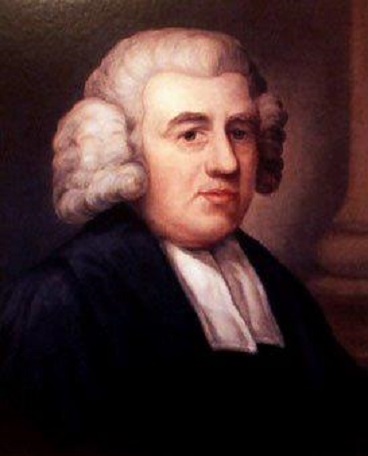


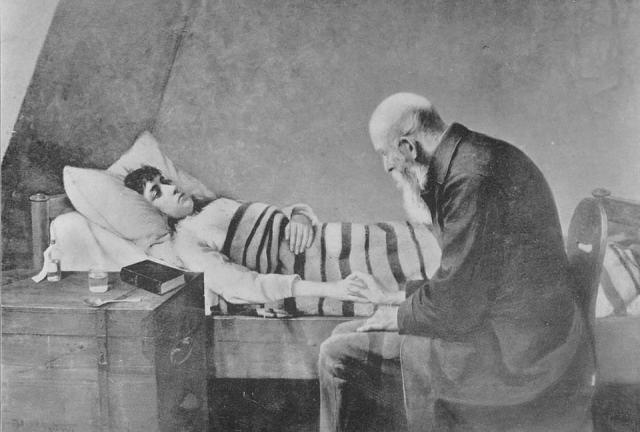


The ills of Life are often Blessings in Disguise – Matthew Henry
“What we count the ills of life are often blessings in disguise, resulting in good to us in the end. Though for the present not joyous but grievous, yet, if received in a right spirit, they work out fruits of righteousness for us at last.”
– Matthew Henry
https://www.facebook.com/ChristianDevotionalReadings
Share this: